

A fall on the netball court, a heavy tackle at the footy, or a slip on the stairs — and suddenly something does not feel right. Bone pain after an impact can be hard to interpret on your own, and many people are unsure whether to push through, ice it, or head straight to the emergency department. Getting clarity early matters, because the right plan in the first few days can change how well a fracture heals.
Acute bone fractures are one of the more common reasons people see a sports and exercise physician. Below, we walk through how we assess them, what investigations we use, and how modern management has moved well beyond the old “six weeks in a cast” approach.
What is an acute bone fracture?
An acute bone fracture is a break in a bone that happens suddenly, usually because of a single identifiable event. That event might be a fall, a collision, a twist, or a direct impact. The forces involved have to be enough to overwhelm the strength of the bone itself.
Fractures can range from a tiny crack in a toe through to a displaced break in a major bone where the alignment has shifted. Some are obvious. Others are subtle and only show up on imaging — or sometimes not even there.
Who is affected by acute bone fractures?
Acute fractures can happen to anyone, but certain groups see them more often. Contact sport athletes, runners, cyclists and recreational players all carry a higher risk because of the speed and impact involved in their activities. Older adults who fall are another common group, and so are children and adolescents whose growing bones respond differently to load.
Underlying factors also matter. Low bone density, poor nutrition, low energy availability and previous injuries can all make a bone more vulnerable to breaking when force is applied.
Signs and symptoms to look out for
Not every fracture screams its presence. Watch for these features after a significant injury:
- Sharp, localised pain right over the bone when you press on it
- Swelling and bruising that develops over the hours following the injury
- Reluctance or inability to weight bear through the leg, or to push through the arm
- Visible deformity or a limb that looks out of alignment
- Pain that does not settle with rest and simple pain relief
- A snap or crack sensation at the moment of injury
If several of these features are present, an early assessment is sensible. Some fractures — particularly in the finger, toe or small bones of the foot — can be diagnosed clinically without imaging at all.
How are acute bone fractures treated?
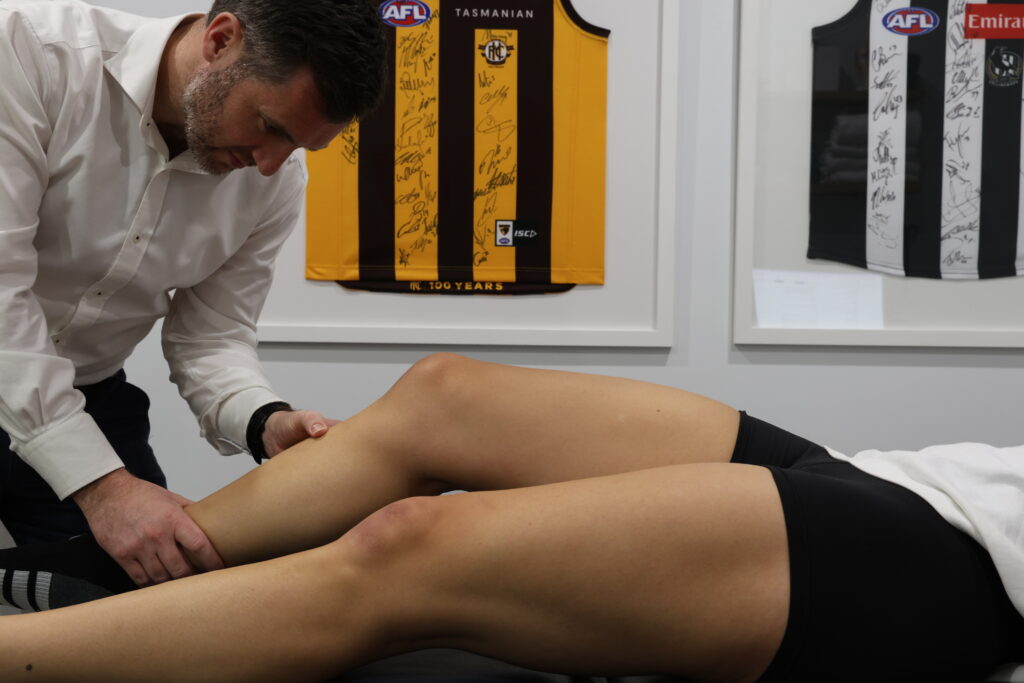
Management starts with a careful history. We want to know exactly what happened, the speed and direction of the force, and how the area has behaved since. From there, examination focuses on alignment, palpation pain, swelling and the ability to load the limb.
Sports Medicine
Our Specialist Sports and Exercise Physician Dr. Liam West works through each case individually. Investigations are chosen based on what will actually change the plan — usually an X-ray first, with MRI or CT reserved for cases where more detail is needed. Some injuries do not need imaging at all.
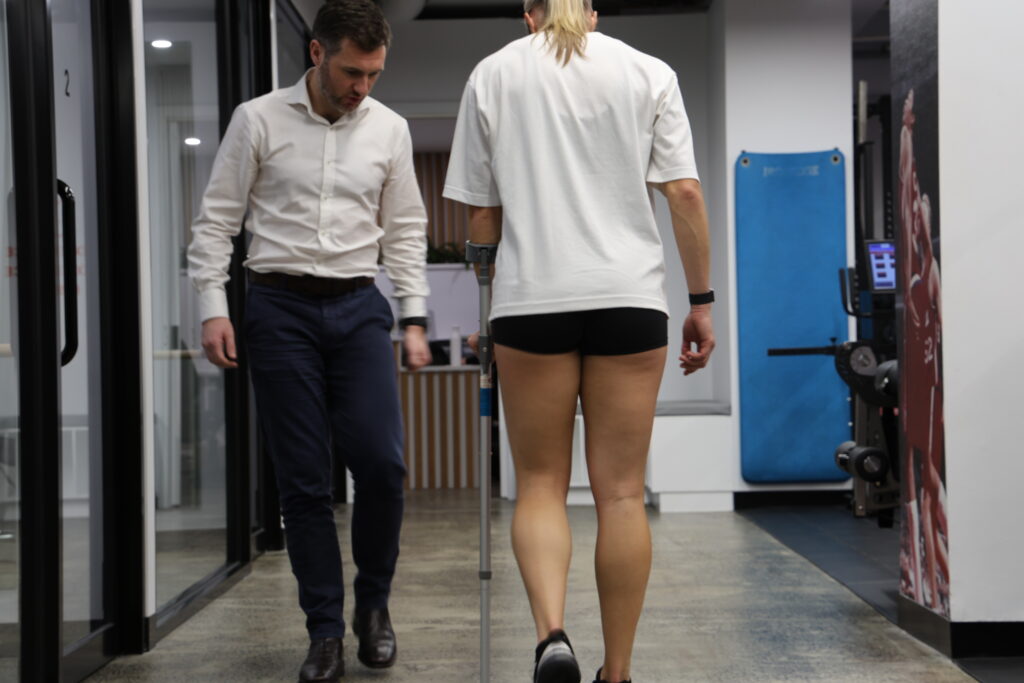
Education is a huge part of early management. You need to know what you can and cannot do, tailored to your job, your sport and your daily life. Pain relief usually means paracetamol rather than anti-inflammatories, because prolonged anti-inflammatory use can interfere with bone healing. Offloading with crutches, a moon boot or a sling is often the most effective short-term tool.
Physiotherapy
Rather than working to generic six- or twelve-week timeframes, we progress loading as the bone tolerates it. Bones actually need appropriate loading at each stage of healing — keeping a limb completely offloaded for too long is not the best plan. Our physiotherapy team builds a graduated program that restores strength, addresses muscle wasting and rebuilds confidence in the injured area.
Surgical referral when needed
Some acute bone fractures heal better with surgery, either because the alignment cannot be held conservatively or because an operation gives a faster, more reliable return to function. When that is the case, we coordinate with a region-specific orthopaedic surgeon and then guide rehab after the procedure.
What to expect at your appointment
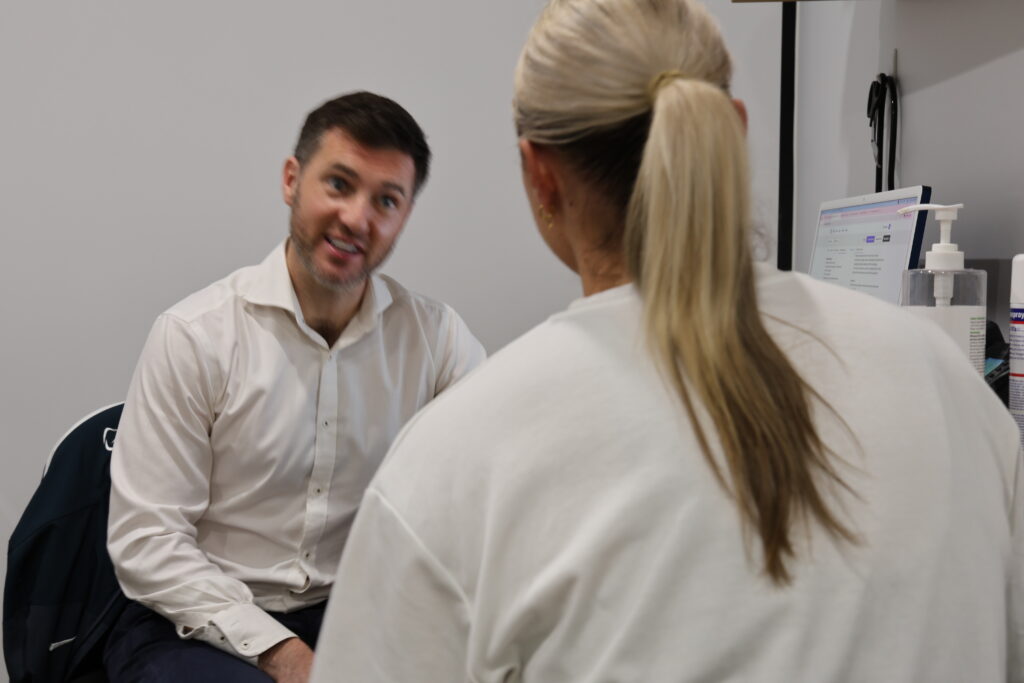
Your first visit will involve a detailed conversation about the injury and how it has behaved since. We will examine the area, check alignment, test your ability to load it, and decide whether imaging is needed. If you have already had X-rays or been to the emergency department, bring those reports with you.
From there, you leave with a clear plan: what to do, what to avoid, what pain relief to use, and when to come back. As your symptoms settle, weight bearing and activity are progressed step by step rather than waiting for an arbitrary date on the calendar.
If you have had a recent injury and are unsure whether a bone is broken, or you have a confirmed fracture and want a clearer rehab plan, an early review is worth the visit. Dr. Liam West manages acute fractures regularly and works closely with our physiotherapy team to get you back to full function safely.
This article was written by Dr. Liam West, Specialist Sports and Exercise Physician at Melbourne CBD Physiotherapy and Sports Medicine Clinic.