

Have you been doing your shoulder exercises for months but the pain just isn’t going away? Maybe you’ve tried rest, maybe you’ve tried strengthening, and yet your shoulder still aches, clicks, or feels uncomfortable in certain positions. For many people, the missing piece of the puzzle is a condition that often flies under the radar — shoulder instability.
This is part one of a five-part blog series exploring shoulder instability, written from cases we regularly see at Melbourne CBD Physiotherapy and Sports Medicine Clinic.
What is shoulder instability?
Shoulder instability happens when the ball of the shoulder joint (the top of your upper arm bone) moves too much within its socket. Sometimes the joint partially slips out of place — this is called a subluxation. Other times it fully comes out, which is a dislocation. But here’s the important part: the movement doesn’t have to be dramatic. Small, repeated micro-movements (we call this micro-instability) can be enough to cause ongoing shoulder pain.
At our clinic, we see two main types of shoulder instability that often go undiagnosed:
- Multi-directional instability (MDI) — where the shoulder joint subluxes or dislocates in two or more directions (for example, forwards and downwards, or in all directions).
- Posterior shoulder instability — where the ball of the shoulder slides excessively backwards on the socket. This type is less common than the forward (anterior) version, but it’s significantly under-recognised.
Because these conditions are frequently missed, many people end up doing standard rotator cuff rehabilitation (exercises for the small muscles that stabilise the shoulder) without ever addressing the real driver of their pain.
Who is affected?
Shoulder instability can affect a wide range of people, not just athletes. We commonly see it in:
- Young, active people whose joints are naturally more mobile or hypermobile (looser ligaments than average)
- Athletes in overhead or contact sports — swimmers, throwers, footballers, climbers
- People who have had a previous shoulder dislocation or subluxation
- Office workers and gym-goers with persistent shoulder pain that hasn’t improved with standard rehab
- Anyone who has been told their shoulder is “just a rotator cuff issue” but isn’t getting better
If your shoulder pain has been hanging around despite doing the right rehab, it’s worth asking whether instability is part of the picture.
Signs and symptoms to look out for
- A feeling that your shoulder is “loose”, slipping, or about to give way
- Clicking, clunking, or catching sensations during certain movements
- Pain at the back, front, or deep within the shoulder — especially with overhead or pushing tasks
- Discomfort when lying on the affected side at night
- Weakness or fatigue in the shoulder after relatively light activity
- Symptoms that haven’t improved (or have worsened) despite weeks or months of standard rotator cuff exercises
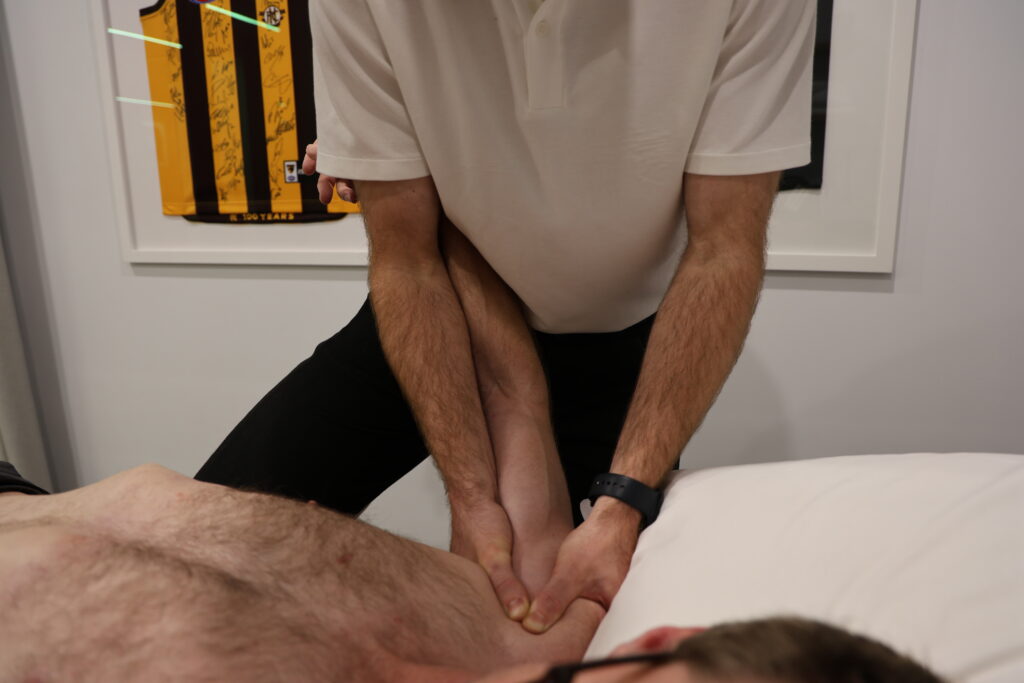
How is shoulder instability assessed and treated?
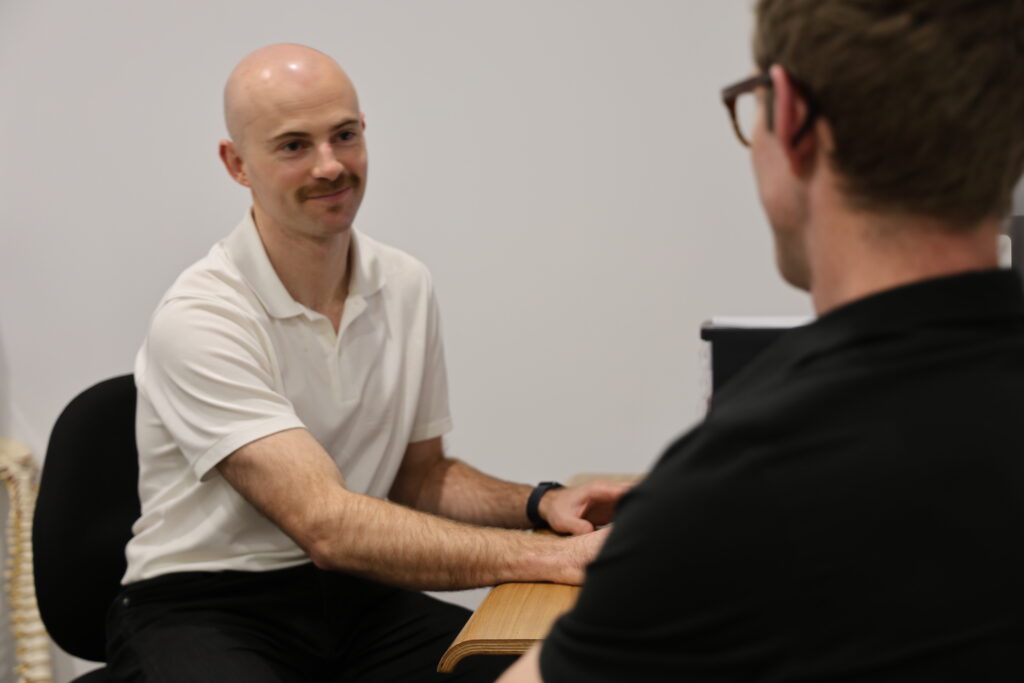
Getting the diagnosis right is everything. Without the correct diagnosis, you can keep doing exercises for months without ever addressing the actual problem. That’s why our approach starts with a really thorough conversation and clinical examination before we jump into treatment.
Physiotherapy
Our Physiotherapist Jake Smith sees many second opinions for ongoing shoulder pain that hasn’t responded to traditional rehab. The first appointment often involves a detailed subjective assessment — asking targeted questions about your neck, your upper back (thoracic spine), and the shoulder itself. Why? Because pain in the shoulder region can come from any of these areas, and sometimes more than one at once.
Once instability is identified as the primary driver, treatment is highly individualised. It typically involves restoring control of the shoulder blade, strengthening the deep stabilising muscles, and gradually reloading the shoulder for the activities you want to get back to. Complex cases — such as multi-directional or posterior instability — may also be co-managed with our shoulder specialists, including Adrianna Cann, APA Titled Sports and Exercise Physiotherapist.
Sports Medicine
In some cases, imaging or further medical input is needed to rule out structural damage or guide the next steps. Our sports doctors work alongside our physiotherapists to make sure nothing is missed and that you have a clear plan forward.
What to expect at your appointment
Your first appointment may feel different from what you’ve experienced elsewhere. Rather than rushing straight to hands-on treatment or exercises, we spend the time needed to get the diagnosis right. Expect a detailed conversation about:
- How your pain started and how it behaves day-to-day
- Any history of dislocations, subluxations, or feelings of the shoulder slipping
- Your neck and upper back, since these areas often play a role
- The sports, work tasks, or hobbies you want to return to
From there, a thorough physical assessment will help confirm whether instability is the primary driver of your symptoms, or whether something else — like the rotator cuff or the neck — is contributing. Only then do we build a treatment plan tailored specifically to you.
Ready to take the next step?
If your shoulder pain has been dragging on and standard rehab isn’t shifting it, shoulder instability could be the missing piece. Getting the right diagnosis is the first step toward real, lasting improvement.
Book an appointment with Jake Smith, Physiotherapist, or one of our shoulder team via our website. Our multidisciplinary team — physiotherapists, sports doctors, and allied health professionals — work together to find the root cause of your pain and get you back to what you love doing.
Stay tuned for part two of this series, where we explore the mechanisms behind shoulder instability — why it develops and how we work out exactly what’s driving your shoulder pain.
This article was written by Jake Smith, Physiotherapist at Melbourne CBD Physiotherapy and Sports Medicine Clinic.