

If you have ever been told you might benefit from orthotics, you may have left the appointment a little confused. Are custom orthotics better than the ones you can buy off the shelf? Do you need a hard device or a soft one? The truth is there is no single best option — the right orthotic depends entirely on what your feet actually need.
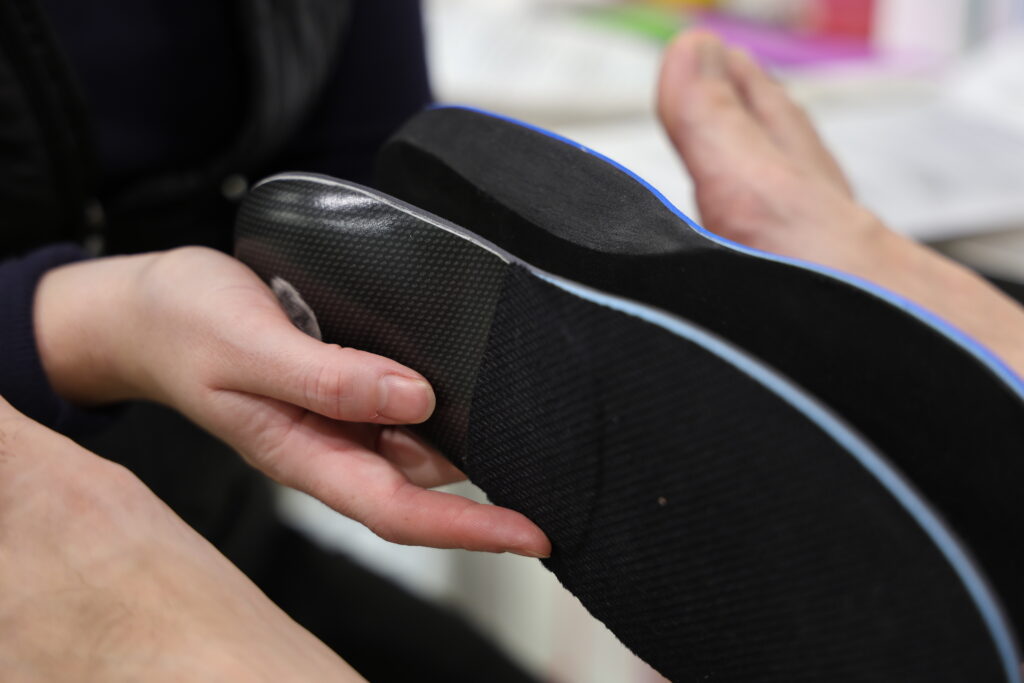
What are the different types of orthotics?
An orthotic is a device that sits inside your shoe to change how your foot loads, moves or feels during activity. There is not just one kind of orthotic. The design depends on what we are trying to change — whether that is motion, pressure, pain, function or how long you can stay on your feet.
The first major split is between functional and accommodative devices. Functional orthotics influence the way your foot moves and loads. They guide foot motion, improve stability, reduce excessive tissue strain (overloading of muscles, tendons or joints) and change the timing and direction of force travelling through your foot. Accommodative orthotics work differently. Rather than changing mechanics, they add cushioning, reduce peak pressure and protect sensitive areas such as bony prominences (parts of bone that sit close to the skin).
In short, a functional orthotic changes the mechanics of your foot, while an accommodative orthotic reduces pressure and irritation.
Who should pay attention to orthotic choice?
Orthotics get prescribed for a wide range of people. You may be considering them if you have heel pain, arch pain, forefoot pain, an Achilles problem, or if you are recovering from a foot or ankle injury. Runners, dancers, hikers and people who spend long days standing at work also commonly benefit. Children with developing foot mechanics and older adults managing arthritis sit in this group too.
The key point is that the type of orthotic matters as much as the decision to wear one. A device that suits a netballer with forefoot pain will not suit a tradie with a flat foot and Achilles tendon irritation.
Signs and symptoms that orthotics may help
- Persistent heel or arch pain, especially first thing in the morning
- Forefoot pain or a feeling of walking on a pebble
- Recurrent Achilles tendon pain or calf tightness with activity
- Pain under bony prominences or hard skin that keeps coming back
- Reduced activity tolerance — your feet give out before the rest of you does
- Recurring lower limb injuries that seem linked to how your foot loads
How are the different types of orthotics chosen?
Choosing an orthotic is a clinical decision based on assessment findings, your goals, your footwear and how much your feet can tolerate. Below is how the main options compare.
Prefabricated or off-the-shelf orthotics
Prefabricated devices can be useful when symptoms are mild, or when we need to offload a sore structure in the forefoot and your foot mechanics do not need much extra support. We often use them for short-term symptom relief. The material — usually a compressed EVA foam — is not built to last under heavy activity loads, so durability is limited.
Customised orthotics
Custom devices give us much more control over the shape, the degree of correction, the materials used and the demands of your sport or job. They suit people who need higher durability or specific modifications that off-the-shelf devices cannot offer. Because they are made to your foot, custom orthotics are often more slimline and fit into a wider range of shoes.
Sport or activity specific orthotics
Some orthotics are designed around a particular activity and shoe. For a runner, that might mean a more durable shell and a cushioned top cover. For someone wearing dress shoes at work, a lower-profile device makes a big difference. Some patients end up with different orthotics for different shoes or activities, and that is completely normal.
Material choice matters too. Rigid materials give greater control, stability and durability. Softer materials prioritise cushioning, pressure redistribution and comfort, but compress faster and offer less mechanical control. For most musculoskeletal cases, our Podiatrist Tania Vascon uses semi-rigid materials. These flex slightly through the shell but stay durable, balancing good correction with comfort.
What to expect at your appointment
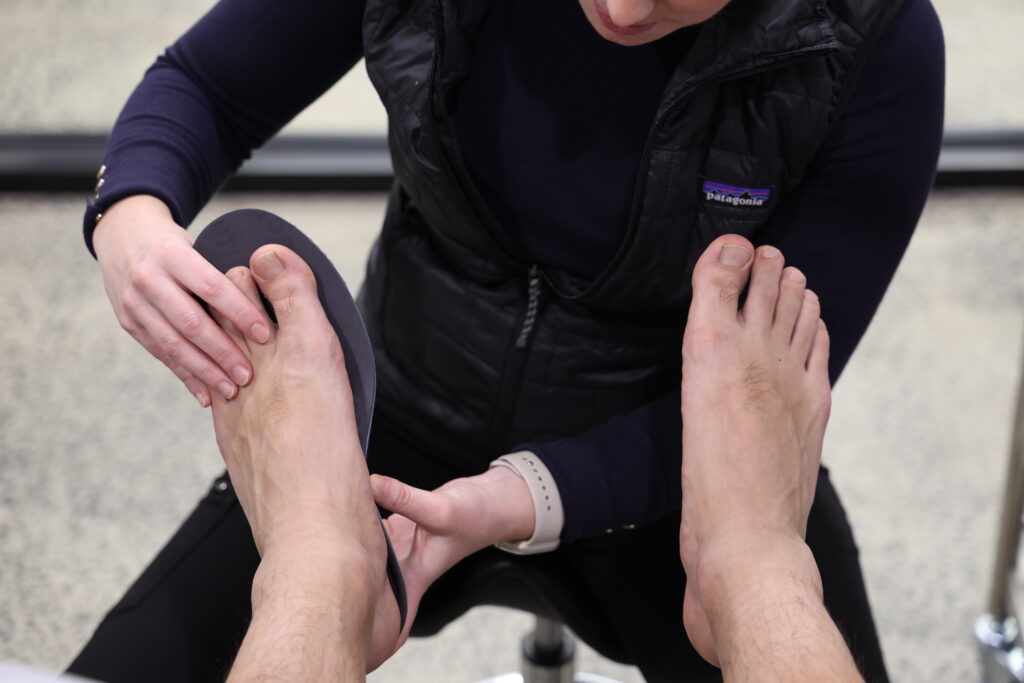
A podiatry assessment starts with a conversation about your symptoms, your activity, your footwear and your goals. From there, we look at how your foot moves, how you load through it, and how your lower limb behaves when you walk or run. Footwear gets reviewed too — sometimes a shoe change alone is enough to settle symptoms.
If an orthotic is appropriate, we discuss which type fits your needs best. That might be a short trial with a prefabricated device, or a custom orthotic built specifically to your foot. A custom orthotic, or the most expensive option, is not automatically better. It is only better when you actually need what a custom orthotic provides. Many conditions respond well to simple load changes, and in some cases a prefabricated device gives plenty of support.
If you have been wondering whether orthotics could help — or whether the ones you already have are right for you — it is worth getting a proper assessment rather than guessing. Tania Vascon regularly works through these decisions with patients and can match the device to what your feet, footwear and activity actually need.
This article was written by Tania Vascon, Podiatrist at Melbourne CBD Physiotherapy and Sports Medicine Clinic.