

You have been doing your rotator cuff exercises for weeks, maybe months. The pain still flares when you press overhead, drop into a push-up, or carry your shopping bags. Sound familiar? For a lot of active people, the real problem is not the rotator cuff at all — it is shoulder instability, and it needs a different approach.
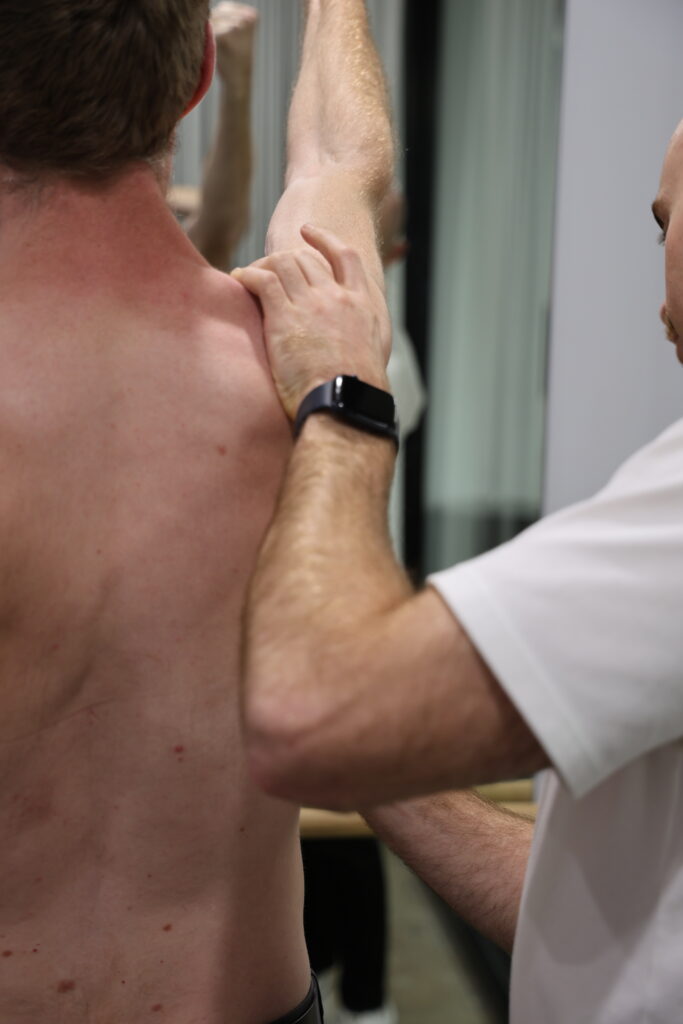
What is shoulder instability?
Shoulder instability means the ball of the upper arm bone (the humeral head) does not sit and move properly within its socket (the glenoid). The shoulder is the most mobile joint in the body, and a network of structures keeps it centred. These include the joint capsule (the sleeve of tissue wrapping the joint), the ligaments, and the rotator cuff muscles that fine-tune movement.
When any of these structures cannot do their job, the ball slides further than it should. That extra movement causes pain, weakness, and a feeling that the shoulder is not quite trustworthy. Two presentations come up again and again in clinic — multi-directional instability (looseness in more than one direction) and posterior instability (the ball drifts towards the back of the socket).
Who is most commonly affected?
The group we see most often misdiagnosed is the recreationally active adult. Think someone who currently plays sport, used to play sport, or trains in the gym a few times a week. They are usually told they have a rotator cuff issue, prescribed standard strengthening exercises, and the symptoms either stay the same or get worse.
Two underlying causes drive most cases. The first is generalised joint hypermobility — an inherently loose joint capsule that allows extra movement. The second is dynamic instability, where the messaging from the brain to the stabilising muscles is not working well. Many people have a mix of both.
Signs and symptoms to look out for
- Pain during overhead activities or pressing movements like bench press and push-ups
- Anterior (front of shoulder) pain that does not settle with rotator cuff exercises
- A feeling of looseness or the shoulder “slipping” with everyday tasks
- Difficulty or discomfort carrying objects by your side, like a shopping bag or suitcase
- Apprehension when steering the wheel, especially reaching the painful arm across your body
- Recurrent shoulder pain that keeps coming back despite rest and rehab
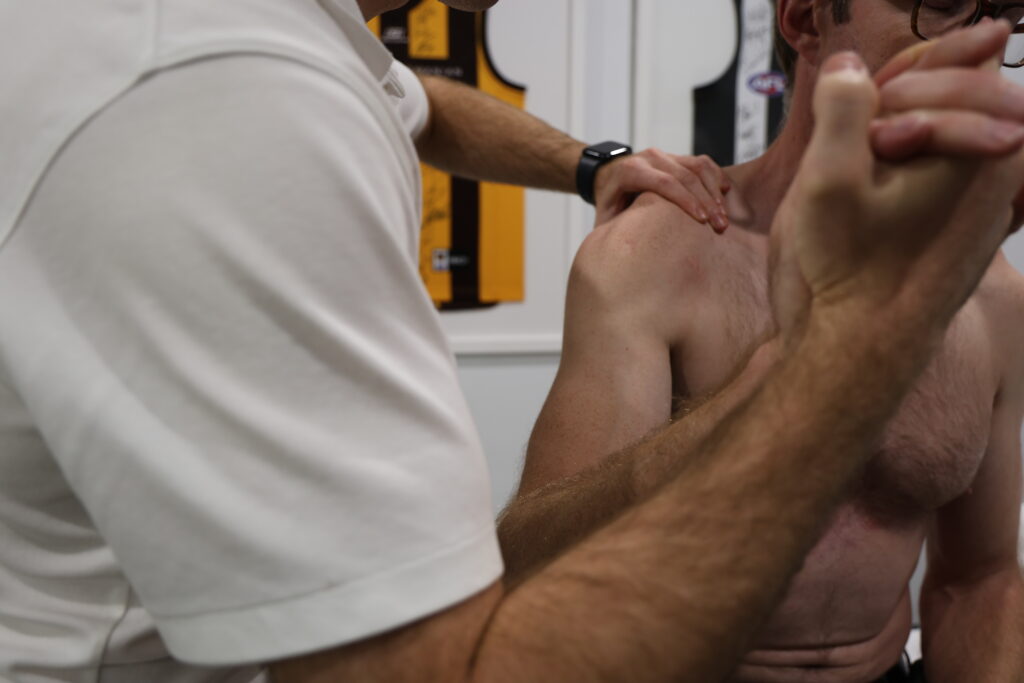
Why traditional rotator cuff exercises often fail
Standard rotator cuff programs assume the problem is weakness or irritation of those small stabilising muscles. With true instability, the rotator cuff is not the root cause — it is the structure being overworked because something else is letting the joint move too much.
Take posterior instability as an example. The humeral head shifts backwards more than it should during pressing. Muscles at the front of the shoulder, like the subscapularis and the long head of the biceps, fire harder to try to stabilise the joint. That overwork is what produces the anterior pain. Strengthening the cuff in isolation does not fix the backward drift causing the problem in the first place.
How is shoulder instability treated?
Effective treatment starts with identifying which type of instability you have and why it is happening. From there, the rehab plan targets the actual driver — not just the painful area.
Physiotherapy
A thorough assessment looks at joint laxity, the direction of instability, scapular (shoulder blade) control, and how your shoulder behaves under load. Treatment usually involves retraining the connection between the brain and the deep stabilising muscles, building strength through ranges that have been avoided, and progressively loading the movements that previously caused pain. Jake Smith has a particular interest in shoulder instability, dislocation, and shoulder trauma, and works with patients who have not responded to standard rehab.
For complex or multi-directional presentations, Adrianna Cann, APA Titled Sports and Exercise Physiotherapist, also sees a high volume of these cases and can help guide longer-term management.
Sports medicine input
Some patients benefit from a sports medicine review to rule out structural damage such as labral tears (injury to the cartilage rim of the socket) or bony changes. Imaging is not always needed, but when it is, having the right specialist involved makes a difference.
What to expect at your appointment
Your first visit involves a detailed conversation about your symptoms, sport, training history, and what has and has not helped so far. We then assess your shoulder through specific movement and stability tests to work out the direction and driver of the instability.
From there, you walk away with a clear explanation of what is going on and a tailored plan. Early sessions focus on movement retraining and building tolerance to the positions that hurt. Later stages progress towards strength, sport-specific loading, and return to performance — whether that means getting back to the gym, the football field, or just being able to drive without flinching.
If pressing exercises, overhead lifts, or simply carrying a bag have been bothering your shoulder, and rotator cuff exercises have not made a meaningful dent, instability is worth ruling in or out. Jake Smith and the shoulder team see these presentations regularly and can help you understand what is actually driving your pain.
This article was written by Jake Smith, Physiotherapist at Melbourne CBD Physiotherapy and Sports Medicine Clinic.