

One of the biggest mistakes in foot and leg care is assuming that pain means your foot needs to be propped up or corrected straight away. Before reaching for an insole, a good clinician asks a more useful question. Is the structure of your foot causing the problem, or is the way your body is moving overloading an otherwise normal foot?
That single question changes everything about how we treat you. It is also the reason two people with almost identical foot pain can need very different management plans.
Do you need orthotics, or do you need something else?
Orthotics are inserts that sit inside your shoe to change how force moves through your foot. They are a brilliant tool when used in the right situation. They are not a magic fix for every sore foot.
To work out whether you actually need them, we look at two possible drivers of your pain: structural drivers and dysfunctional movement drivers. The answer guides the treatment.
When structure is the real driver
Sometimes the shape and mechanics of your foot are the main reason tissue is getting overloaded. Mechanical stress (force going through bone, tendon or joint) keeps exceeding what the tissue can tolerate, and pain follows.
Structural drivers can include:
- Arthritic restrictions in the foot or ankle joints
- A rigid flat foot or a high arched foot that does not move well
- Limb length differences between left and right legs
- Alignment variations between the forefoot and the rear foot
- Fixed deformities or joints that simply do not bend through their full range
In these cases the foot itself changes how load is shared, how joints move, and where pressure builds up. The tissue is not failing because you are weak. It is failing because the mechanics of your foot do not allow normal movement. Orthotics are genuinely valuable here. They create a more tolerable environment under the foot, redistribute force, and take pressure off the stressed tissue.
When dysfunction is the real driver
Other times, the foot looks abnormal but is not actually the problem. The foot is adapting because the system above it is not working well.
Common dysfunctional drivers include:
- Poor calf strength and endurance
- Weak hip control and single leg stability
- Reduced muscle flexibility
- A sudden spike in training load or poor progression
- Fatigue-related collapse later in a run or shift
An orthotic in this situation is not the whole answer. At best it is one tool in a wider plan that also includes strengthening, tendon loading work, mobility, footwear changes and gradually rebuilding your capacity to handle load.
Two feet that look the same, two different plans
Here is the part that surprises most people. Two runners can walk in with the same foot posture, pain in the same spot, and a similar looking gait. One may need orthotic support. The other may simply need stronger calves, better hip control and a smarter training plan.
Take a runner who turns up with arch pain and a foot that rolls in a lot. The obvious assumption is arch support. Look closer though, and we often find weak calves, poor single leg balance, a recent jump in weekly kilometres, and an arch that only collapses once they are tired. The foot posture is not the cause. It is a visible sign of a capacity problem further up the chain.
An orthotic might keep that runner comfortable in the short term. Long term, the real fix is rebuilding strength, control and load tolerance.
How we assess what is actually going on
This is where an objective assessment really matters. Looking at how a foot moves is only part of the picture. We also need to know how the whole leg performs under load.
Podiatry assessment
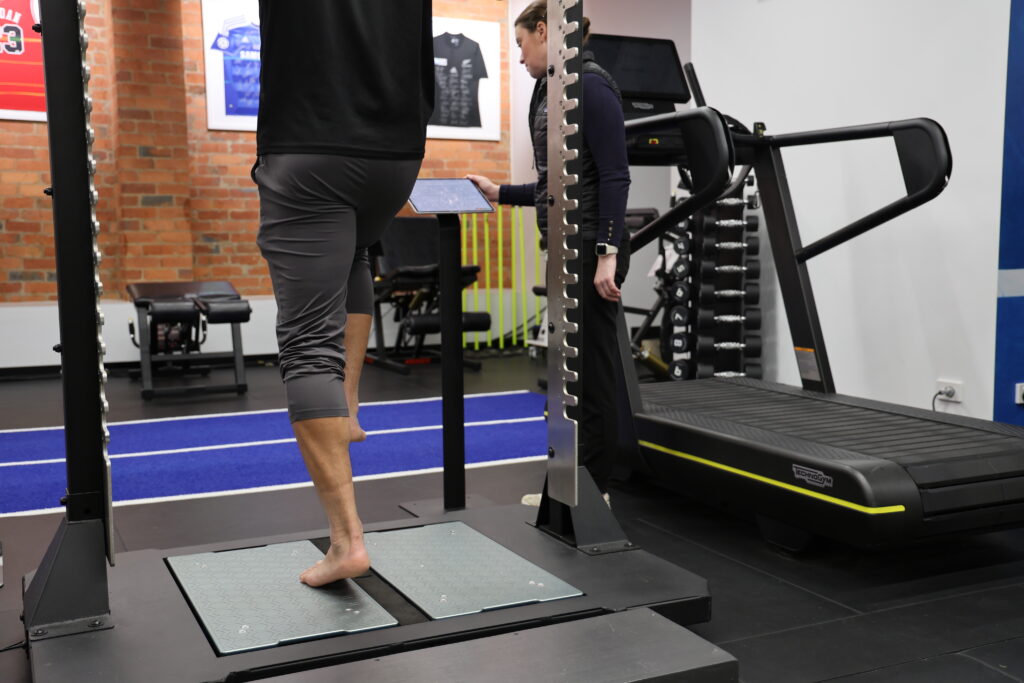
Our Podiatrist Tania Vascon uses Vald technology to measure force production, balance, side to side asymmetry, single leg loading capacity and functional movement. These objective numbers help separate a structural problem from a capacity problem. From there, the plan might involve orthotics, footwear changes, strength work, load management or a combination of all of these.
Physiotherapy support
When the issue is driven by weakness or movement control, working alongside a physiotherapist makes a real difference. Rebuilding calf capacity, hip stability and tendon tolerance is the long term answer in these cases.
What to expect at your appointment
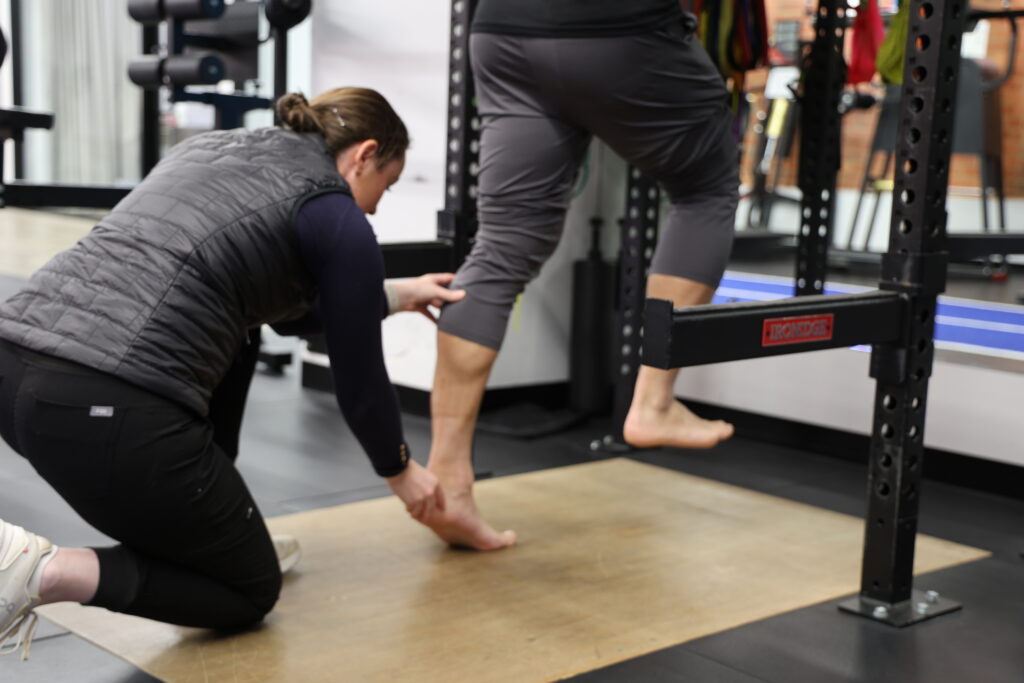
Your first visit is a conversation as much as it is an examination. We will ask about your pain, your training or work demands, your footwear and any recent changes in activity. Then we look at your foot posture, joint range, muscle flexibility and how you move through a single leg squat or a step.
If it is appropriate, we use force plate testing to measure strength and symmetry between sides. By the end of the session you should understand what is driving your pain, whether orthotics are part of the answer, and what the next few weeks of treatment will look like.
Foot pain that is not settling, keeps coming back during running, or has appeared after a change in training is worth having properly assessed rather than guessing at off the shelf insoles. If that sounds like you, Tania Vascon can help work out whether your symptoms are a structural problem, a capacity problem, or a mix of both, and what the sensible next step actually is.
This article was written by Tania Vascon, Podiatrist at Melbourne CBD Physiotherapy and Sports Medicine Clinic.