

For years, foot and lower limb assessments focused on what the foot looked like — flat, high-arched, rolled in, rolled out. Modern musculoskeletal care has shifted. We now know that pain in the foot, ankle and lower leg has far less to do with how things look, and far more to do with how well the tissues handle the load placed on them.
This shift matters because it changes how we treat you. Instead of jumping straight to orthotics or shoe changes, we measure what your muscles can actually do.
What is a lower limb capacity assessment?
A lower limb capacity assessment measures how well your foot, ankle and leg muscles tolerate the demands of walking, running, jumping and standing. Capacity refers to a soft tissue’s ability to produce force, absorb load, handle stress, and recover between bouts of activity.
Within the foot and lower limb, this usually means looking at strength, endurance, stability, and single leg control. Static posture — how your foot sits when you stand still — tells us very little about whether your tissues can cope with the loads of daily life or sport.
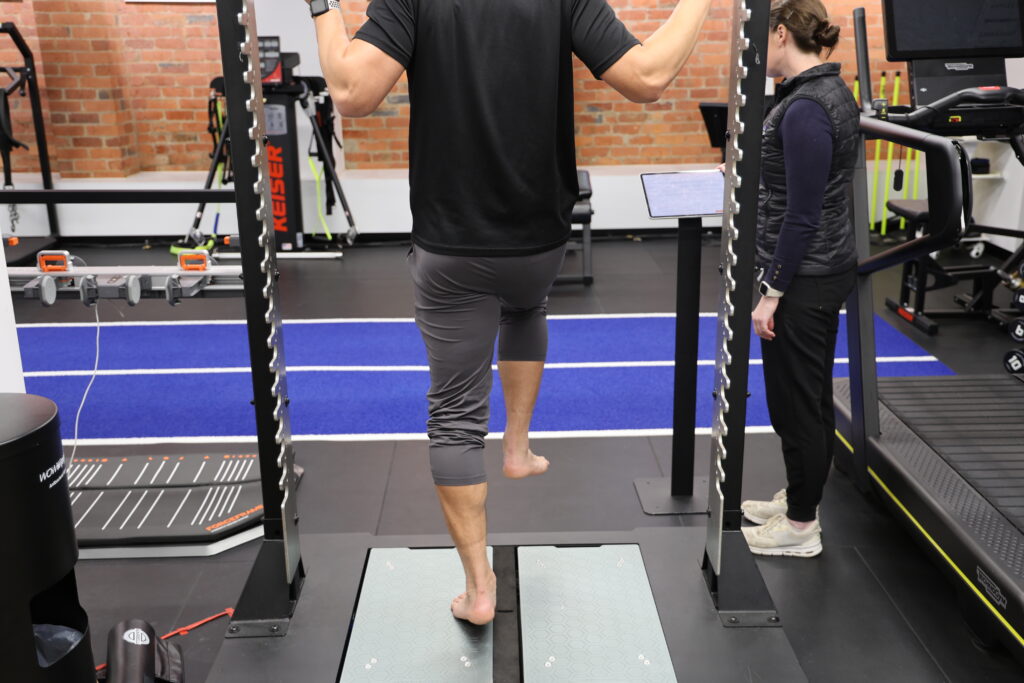
At the clinic we use the Vald system, which gives us repeatable, side-to-side performance data. Rather than relying on observation and feel alone, we get quantifiable strength numbers. This lets us track your progress objectively over weeks and months.
Who should pay attention to capacity?
Anyone with recurring foot, ankle or lower leg pain is a strong candidate for a capacity-focused assessment. Runners, walkers, dancers, hikers and team sport athletes commonly present with overload injuries that trace back to inadequate calf or foot strength.
Reduced calf capacity, in particular, is often associated with conditions such as:
- Achilles tendinopathy (pain and stiffness in the Achilles tendon)
- Tibialis posterior overload (strain of the muscle that supports the arch)
- Medial tibial stress syndrome (also known as shin splints)
- Recurrent calf strains
- Forefoot overload (pain across the ball of the foot)
- Plantar heel pain, including plantar fasciitis (inflammation of the tissue along the bottom of the foot)
If you have tried rest, stretches or new shoes and your symptoms keep returning, your capacity is probably the missing piece.
Signs your tissues may not be coping with load
- Pain that returns every time you increase your walking or running distance
- Calves that fatigue or cramp earlier than they used to
- Difficulty performing more than a handful of single leg calf raises
- A feeling of your foot or ankle “collapsing” later in a run or long day
- Recurrent niggles in the Achilles, shin, arch or heel
- One leg that feels noticeably weaker or less stable than the other
How is a capacity problem treated?
Once we have your assessment data, we build a plan around what your tissues actually need. Treatment is rarely a single intervention — it usually combines targeted loading with strategies that protect you while you rebuild.
Physiotherapy
If we find poor strength, reduced endurance, fatigue-related movement collapse or low load tolerance, capacity work becomes the priority. A physiotherapy program might include:
- Progressive calf strengthening
- A structured tendon loading program for the Achilles or plantar fascia
- Plyometric (jumping and hopping) progressions for athletes
- Balance and single leg control work
- Load management — adjusting how much running, walking or training you do week to week
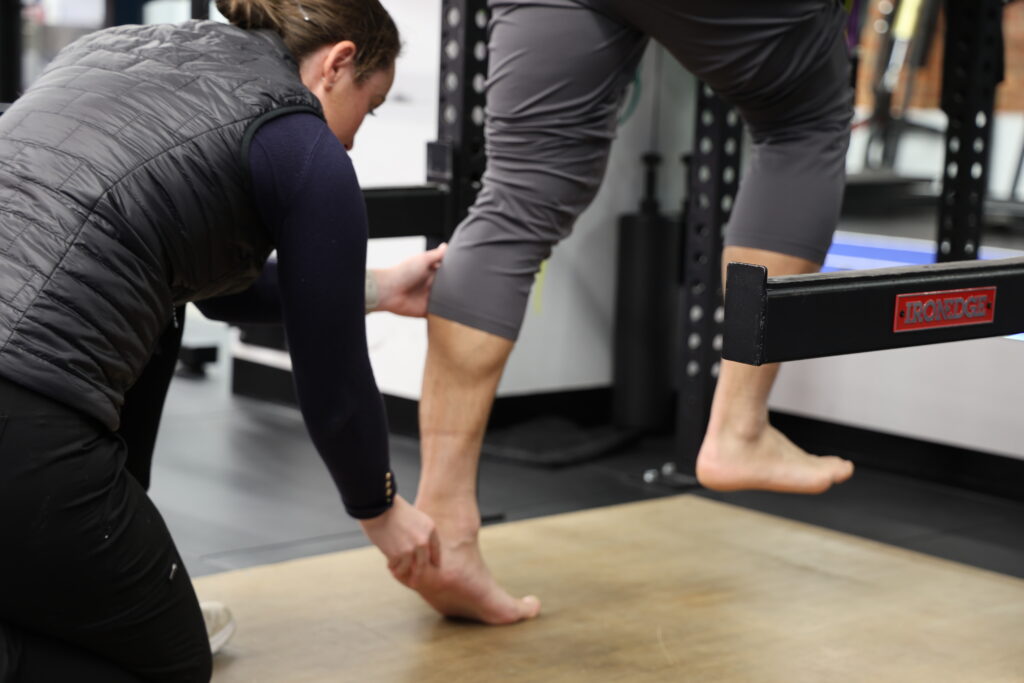
Our APA Titled Sports and Exercise Physiotherapist Nick Cross regularly works with patients whose foot, ankle and Achilles symptoms have not responded to passive care. Senior Physiotherapist Matthew Forrester also runs comprehensive lower limb assessments and builds individualised loading programs from the data.
Podiatry and orthotics
Orthotics still have a clear role — but the role has changed. Rather than being a long-term fix, orthotics are best used to complement a capacity-building program. They reduce stress on irritated tissues during rehab, decrease pain enough to allow the necessary loading, and improve control while your strength catches up.
Put simply, orthotics modify the load while rehabilitation improves your capacity. Together, they reduce the force going through the tissues, improve function, and build long-term resilience. Our podiatrist Tania Vascon works closely with our physiotherapy team to make sure orthotic prescription supports your rehab — not replaces it.
What to expect at your appointment
Your first visit starts with a thorough conversation about your symptoms, training history, footwear and goals. From there, we run through a hands-on physical examination of your foot, ankle and lower leg.
We then move to objective testing using the Vald system. Expect to perform calf strength tests, endurance tests such as repeated single leg heel raises, and balance or control tasks. The data gives us a clear side-to-side comparison and a baseline to measure progress against.
By the end of the session you will have a clear explanation of what is driving your symptoms, whether capacity is the main issue, and what your plan looks like — including whether orthotics would help in the short term.
If you have been battling recurring heel pain, calf tightness or an Achilles niggle that just will not settle, a capacity-focused assessment is usually the most useful next step. Nick Cross, Matthew Forrester and Tania Vascon see these presentations regularly and can help you work out what your tissues can — and cannot — currently handle.