Running injuries require a specific understanding of running mechanics, tissue loading, and the physiological demands of the sport. At Melbourne CBD Physiotherapy, our running injury care is led by Dr Richard Johnston (PhD, La Trobe TRAIL Running Project) and David McNeill (three-time Olympic distance runner and physiotherapist). Every runner receives a comprehensive subjective and objective assessment to identify the true cause of pain, followed by an individualised rehabilitation plan that combines Keiser pneumatic strength training, Kineo intelligent loading, VALD objective testing, and running-specific gait assessment. Return-to-run programming is progressed against measurable criteria, not guesswork.
Frequently Asked Questions
Running injuries rarely occur in isolation — most are driven by a combination of training load, running mechanics, and tissue capacity. We assess and manage the full spectrum of injuries runners present with:
Frequently Asked Questions
Running injury rehabilitation at Melbourne CBD follows a clear framework. First, a comprehensive subjective history establishes training load, footwear, surface, biomechanical context, and past injury. The objective assessment uses Keiser pneumatic strength testing, Kineo intelligent isokinetic load measurement, and VALD force-plate and ForceDecks testing to quantify strength, power, asymmetry, and jump mechanics.
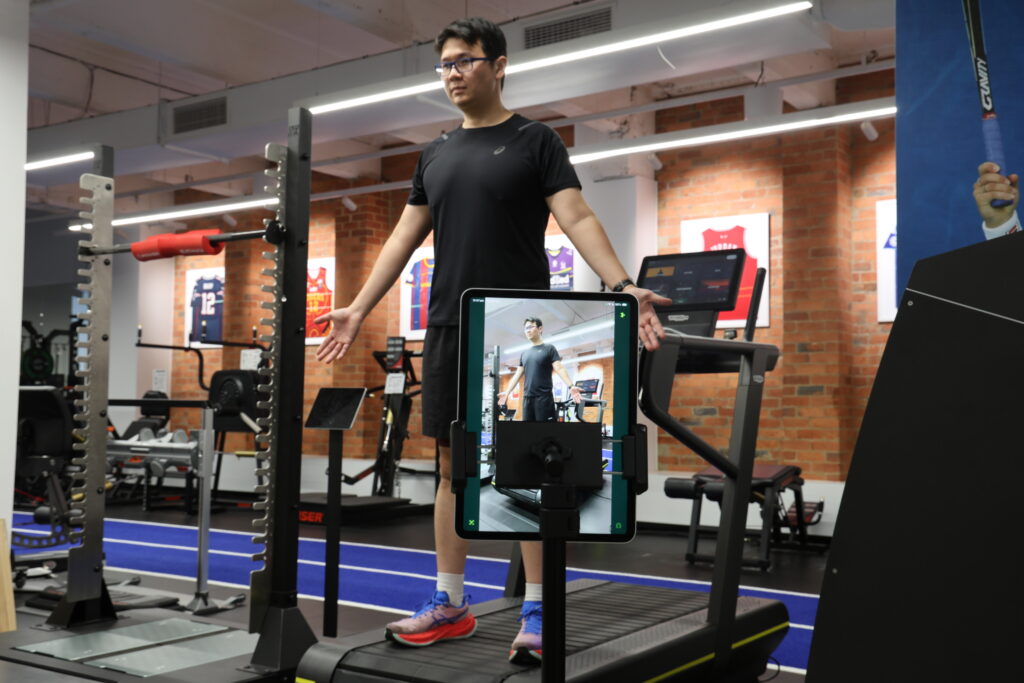
A running-specific gait assessment is used where relevant — treadmill video analysis supported by Dr Richard Johnston’s research background in running biomechanics at La Trobe University. This identifies cadence, loading patterns, and foot-strike characteristics that may be contributing to injury.
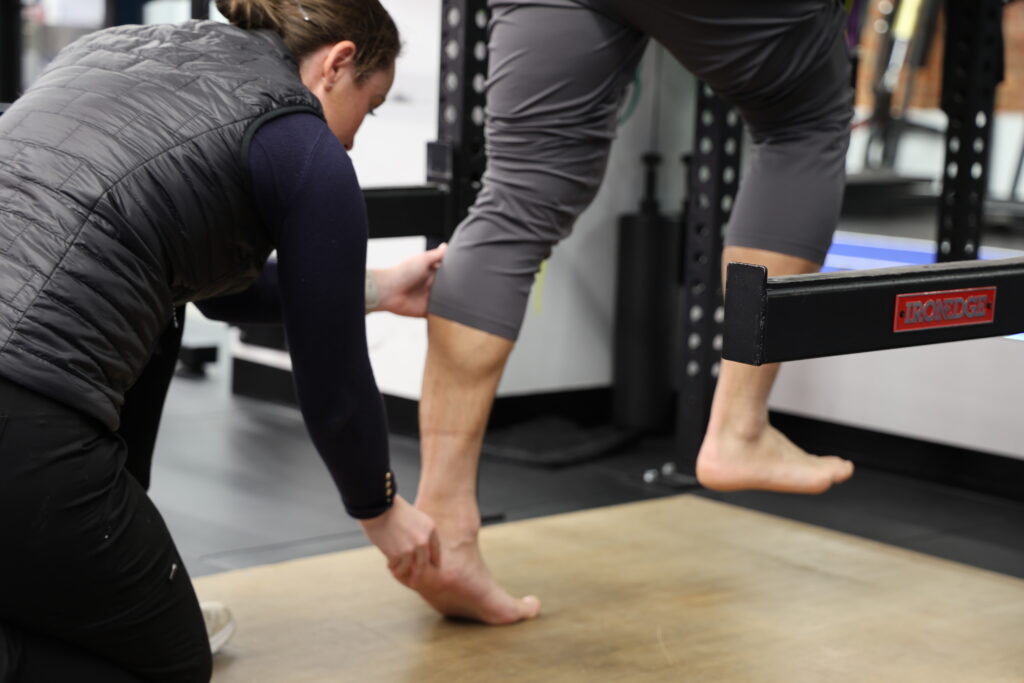
Treatment combines progressive loading (Keiser and Kineo), targeted strength and running-specific conditioning, manual therapy where indicated, and a criteria-based return-to-run programme. Progression is measured against objective markers of strength, pain response, and running-load tolerance — not against time alone.
Running injury care at Melbourne CBD is led by two physiotherapists whose depth of expertise in running is unique in Melbourne CBD.
Dr Richard Johnston holds a PhD in running biomechanics from La Trobe University and is Lead Investigator on the La Trobe TRAIL Running Project. He has worked as a rehabilitation physiotherapist with Melbourne Storm (NRL) and brings a research-led approach to running injury assessment, gait analysis, and return-to-run programming.
David McNeill represented Australia at three Olympic Games in distance running and is now a physiotherapist with clinical expertise in bone stress injury, tendon injury, and running injury rehabilitation. His elite-athlete background brings a first-hand understanding of training load, periodisation, and return-to-run progression.

Our team look forward to working with you to help achieve your goals
Running gait analysis is most valuable when a specific mechanical factor is suspected to be contributing to the injury — for example, high-impact loading with tibial stress injury, or hip-drop with ITB syndrome. It is not required for every running injury. Dr Richard Johnston (PhD, La Trobe) brings research-level expertise to gait assessment when indicated. See our Running Assessments service for a standalone biomechanics assessment.
Rarely. For most soft-tissue running injuries, continued running at a reduced load (modified volume, intensity or surface) is appropriate and often better for tissue adaptation than complete rest. For bone stress injuries and certain tendinopathies, a short period of reduced or substituted loading is usually required before a graded return to running. We will give you a specific running-load plan rather than a blanket “stop running” instruction wherever safe.
Running gait analysis is most valuable when a specific mechanical factor is suspected to be contributing to the injury — for example, high-impact loading with tibial stress injury, or hip-drop with ITB syndrome. It is not required for every running injury. Dr Richard Johnston (PhD, La Trobe) brings research-level expertise to gait assessment when indicated. See our Running Assessments service for a standalone biomechanics assessment.
See a physiotherapist early rather than pushing through persistent pain. Signs that need prompt assessment: pain that increases with each run, pain that persists for more than 24–48 hours after running, sharp or localised bone pain (possible stress injury), night pain, or pain that changes your running form. Early assessment usually means a shorter rehabilitation and faster return to full training.


Dr Richard Johnston and David McNeill lead running injury physiotherapy at Melbourne CBD. Richard’s PhD research at La Trobe University focused on running biomechanics; he is Lead Investigator on the La Trobe TRAIL Running Project and a former Melbourne Storm (NRL) rehab physiotherapist. David is a three-time Olympic distance runner whose clinical interests are in bone, tendon and running injuries. Together they bring a level of running-specific expertise that few Melbourne CBD clinics can match.
Our Melbourne clinic at Ground Floor, 179 Queen Street is easily accessible for patients across central and inner Melbourne, including Southbank, Docklands, Carlton, Fitzroy, Collingwood, Richmond, South Yarra, Prahran and East Melbourne, and serves patients travelling from across the broader Melbourne metropolitan area and Victoria for research-led running injury assessment and rehabilitation.