

If you have ever been told you might need orthotics, you may have wondered whether they are just fancy arch supports, or whether wearing them will make your feet lazy. These are some of the most common questions we hear in clinic. The reality is far more interesting, and far more useful, than the myths suggest.
What orthotics actually do
Orthotics are much more than arch support. We use them as tools to alter the pressure and load going through your feet. They also influence the timing of how your feet move and the motion across the foot itself. All of this changes the stress and improves the function travelling through your feet and lower limbs.
One of the main jobs of an orthotic is to shift pressure away from areas that are overloaded. By spreading force across a larger surface area, peak pressure drops in the spots that are sore. Less peak pressure means less irritation through the structures that are causing pain.
Importantly, orthotics do not control or lock your foot in place. Instead, they guide and slow motion so the symptomatic tissues feel less stress. Think of an orthotic as something that moves you through a more tolerable pathway, not as something that holds you still.
Support, control, or offload — what is your foot actually getting?
Depending on what is going on, an orthotic can do one or more of three things.
- Support — improves contact and stability by sharing load across the whole surface of your foot.
- Control — resists or guides motion, influencing how fast or how far your joints move.
- Offload — takes pressure away from a specific structure, such as the ball of the foot or the base of the heel.
Which of these you need depends entirely on your diagnosis, your foot structure, and the demands you place on your body. A runner with heel pain needs something quite different from someone with pain under the forefoot.
Who actually needs orthotics?
Not everyone with flat feet needs orthotics. Plenty of people go through life with very flat feet and never have a single issue. Orthotics only become useful when your body cannot tolerate the motion or the stress travelling through your foot.
People who tend to benefit include:
- Those with persistent heel pain, such as plantar fasciitis
- Runners or walkers with overload injuries that are not settling
- People with pain under the ball of the foot
- Those returning to activity after a foot or ankle injury
- People whose footwear changes have not been enough on their own
Common myths worth clearing up
Two myths come up almost every week in clinic. The first is that orthotics weaken your feet. They do not. What they actually do is enable pain-free loading. Once you can load the foot without pain, you can finally do the strengthening work that was impossible while you were symptomatic.
The second myth is that orthotics are forever. For most people, they are not. It depends on your condition, your tissue capacity, your foot structure, and your activity demands. Many people find that once their symptoms settle and they have rebuilt strength, they can comfortably go without an orthotic. While the tissue is still irritated though, reducing the load is what allows healing to happen.
How orthotics fit into treatment
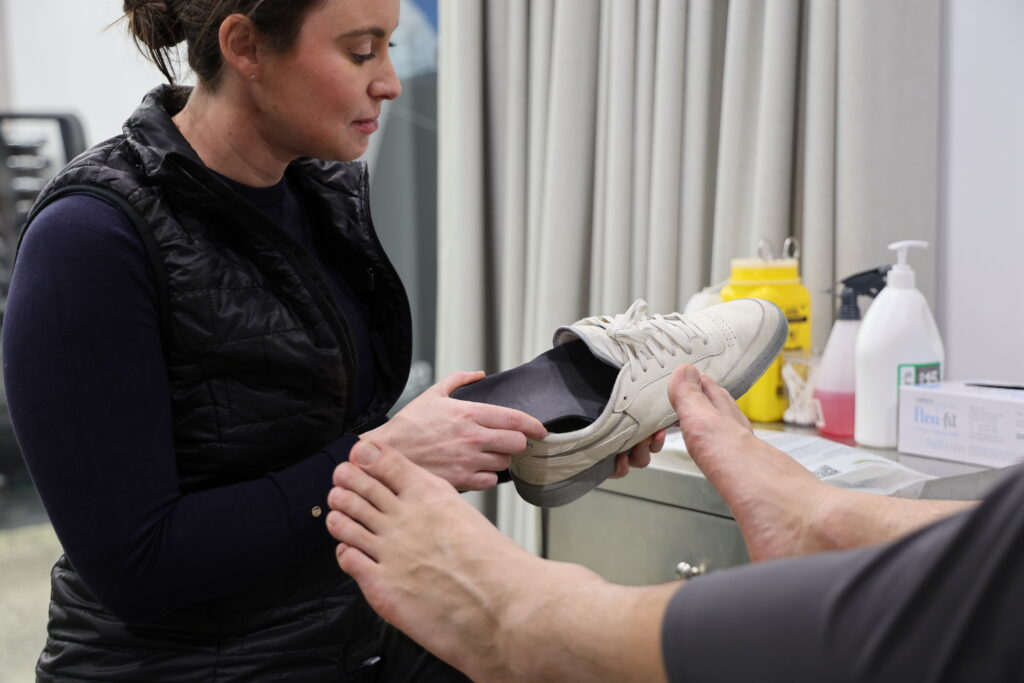
Orthotics are not a first-line or standalone treatment. They work best alongside strength training, load management, footwear changes, and sometimes technique adjustments. A useful way to think about them is as a load modifier — a bridge that keeps you moving while we address the underlying cause of your pain.
Podiatry
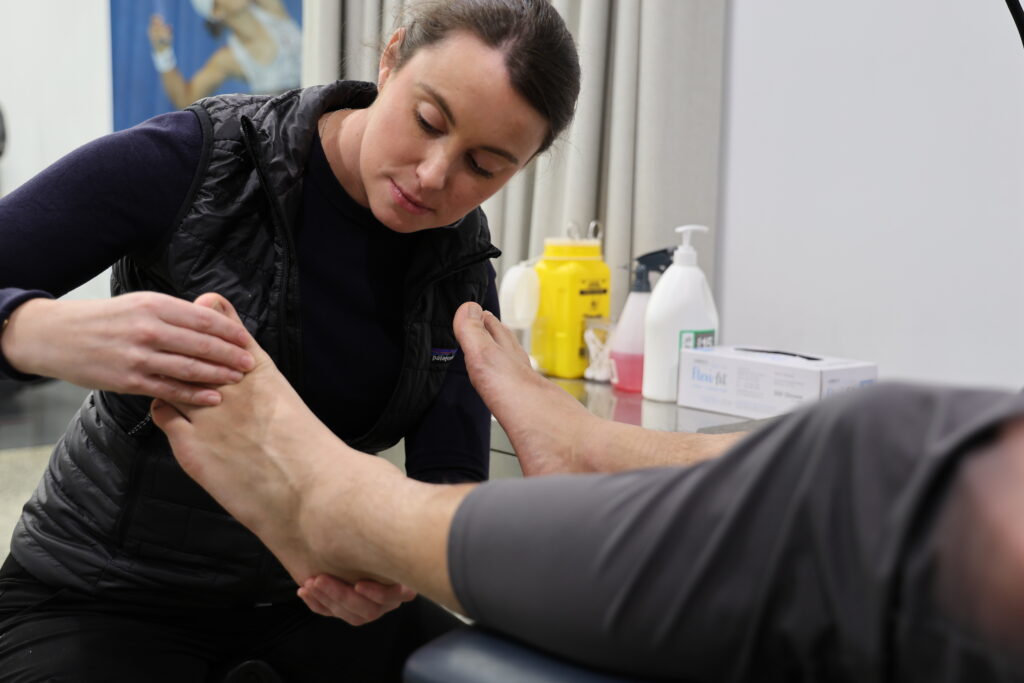
Our podiatrist Tania Vascon assesses how you move, where load is concentrated, and which structures are overloaded. From there, she decides whether an orthotic is genuinely going to help, and what type. Sometimes a small modification to footwear or a temporary offloading device is all that is needed.
Physiotherapy
Once pain has settled enough to load the foot again, building strength and capacity is essential. Our physiotherapy team — including Nick Cross and Matthew Forrester, who both have a strong interest in foot and ankle injuries — work alongside podiatry to make sure you are not just dependent on the orthotic. The goal is always to rebuild your tolerance.
What to expect at your appointment
Your first appointment involves a detailed conversation about your symptoms, your activity, and your footwear. From there, a physical assessment looks at how your foot loads, how your joints move, and how your lower limb behaves under load. You might walk or run, and we may use a 3D foot scan if a custom device is appropriate.
Not every appointment ends with an orthotic prescription. Sometimes the right answer is a footwear change, a strength program, or a short period of offloading. If an orthotic is the right call, we will explain why, what it will do, and roughly how long you might need it.
If you have been battling foot or heel pain that just will not settle, it is worth getting a proper assessment rather than guessing whether an off-the-shelf insole will help. Tania Vascon sees these presentations regularly and can talk you through whether an orthotic is actually the right tool for what is going on, or whether something simpler will do the job.
This article was written by Tania Vascon, Podiatrist at Melbourne CBD Physiotherapy and Sports Medicine Clinic.