

An ACL (anterior cruciate ligament) tear is one of the most significant knee injuries in sport. At Melbourne CBD Physiotherapy & Sports Medicine, ACL rehabilitation is a clinical speciality — led by Tim Sayer (PhD), whose doctoral research is focused specifically on ACL injury and patellofemoral pain syndrome.
Whether you are managing a partial ACL tear conservatively, preparing for ACL reconstruction surgery, or progressing through post-surgical rehabilitation, our evidence-based program uses objective strength testing and progressive loading to guide every stage of your recovery.
Frequently Asked Questions
The ACL is one of four key knee ligaments, providing rotational stability during pivoting and cutting movements. ACL tears are common in football, soccer, basketball, netball, and skiing — and occur significantly more frequently in female athletes.
Common signs of an ACL tear include:
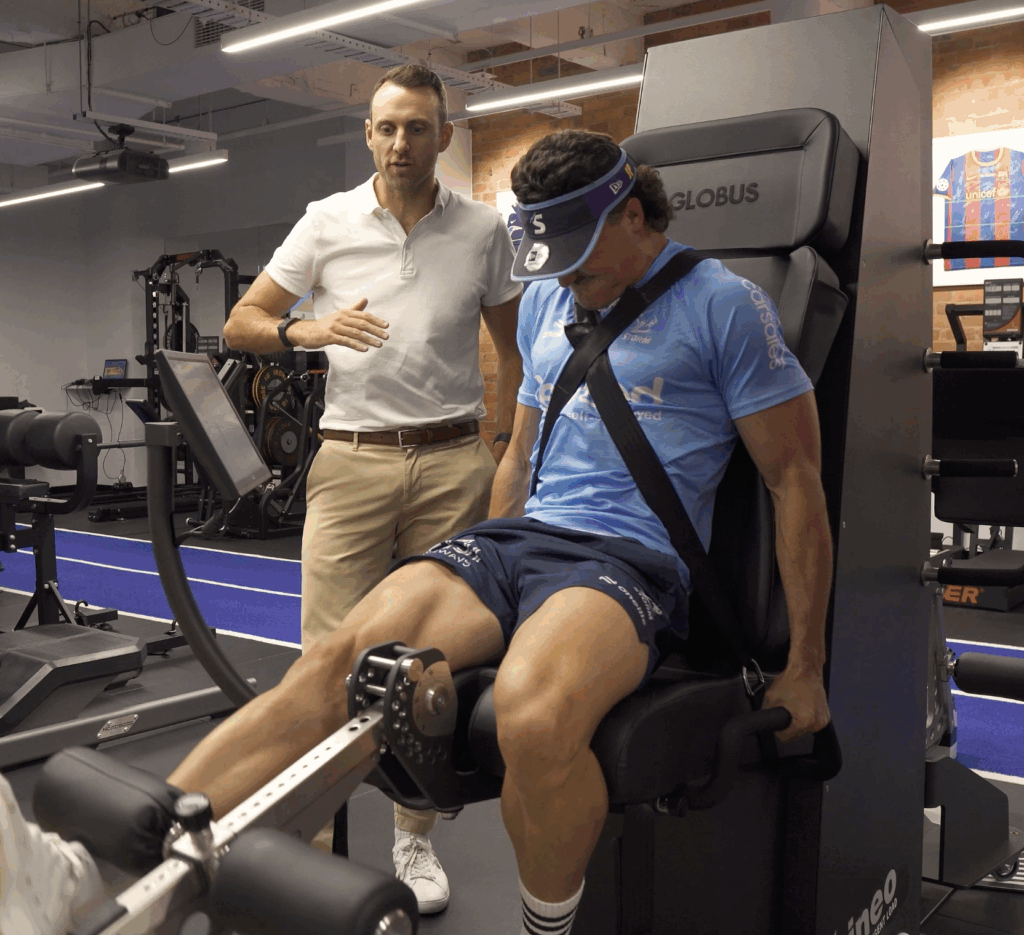
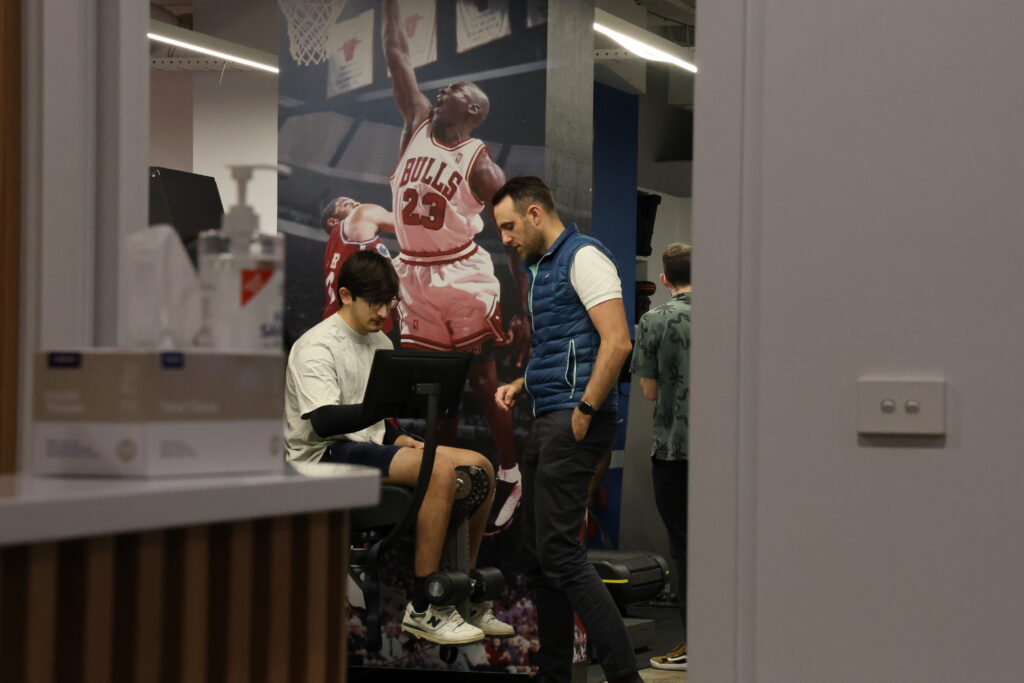
Assessment combines clinical examination (Lachman and pivot shift tests) with objective isokinetic strength testing using our Kineo and Vald equipment.
Frequently Asked Questions
Our ACL rehabilitation program is criteria-based rather than time-based, using objective data from Kineo and Vald equipment to guide your progression through each phase:
We work closely with your orthopaedic surgeon and sports physician to ensure your rehabilitation timeline aligns with surgical milestones and your individual sporting goals.
Our team look forward to working with you to help achieve your goals
It depends on your pathway and goals. Non-surgical rehabilitation is typically a progressive program over several months. After ACL reconstruction, returning to pivoting sport usually takes a minimum of 9–12 months, and often longer. We use criteria-based milestones — strength, control and movement quality — rather than fixed timeframes, because returning when you meet objective targets lowers re-injury risk.
For many people, yes. With a progressive, criteria-based rehabilitation program we can restore strength, control and confidence, and many patients return to active lives — and some to sport — without reconstruction. A subgroup (often called “copers”) manage pivoting activities well non-surgically. We reassess objectively at each stage so that, if surgery does become the better option, you are in the strongest possible position for it.
It depends on your pathway and goals. Non-surgical rehabilitation is typically a progressive program over several months. After ACL reconstruction, returning to pivoting sport usually takes a minimum of 9–12 months, and often longer. We use criteria-based milestones — strength, control and movement quality — rather than fixed timeframes, because returning when you meet objective targets lowers re-injury risk.
Return to running is based on meeting objective criteria rather than a date on the calendar — typically adequate quadriceps strength, pain-free movement and sound single-leg control. This is an area Dr Tim Sayer researches directly, having co-authored an international study on return-to-running criteria after ACL injury. At our Knee Clinic we use objective strength and functional testing (including Kineo isokinetic testing) to decide when running is safe to reintroduce.






For specialist ACL rehabilitation and knee physiotherapy in Melbourne CBD, visit our dedicated Knee Clinic — led by Tim Sayer (PhD), Director and Senior Physiotherapist. Tim’s doctoral research focused specifically on ACL injury, and he is a member of Team ACL — Australia’s leading ACL research consortium. He has extensive experience managing ACL injuries across elite sport and has worked as a sports physiotherapist with the Melbourne Storm.