Tendinopathy is a common overuse injury affecting the tendons — the strong bands of tissue that connect muscle to bone. It describes a spectrum of tendon problems, including pain, stiffness, swelling and reduced function, and most often develops when a tendon is loaded beyond its capacity to adapt.
Some of the most frequently seen presentations include Achilles tendinopathy, patellar tendinopathy (jumper’s knee), gluteal tendinopathy, rotator cuff tendinopathy and tennis or golfer’s elbow. With an accurate diagnosis and a targeted rehabilitation plan, the vast majority of patients recover well.
Frequently Asked Questions
A referral is not required, but a referral from your GP or another medical practitioner will entitle you to a Medicare rebate on your consultation.

Frequently Asked Questions
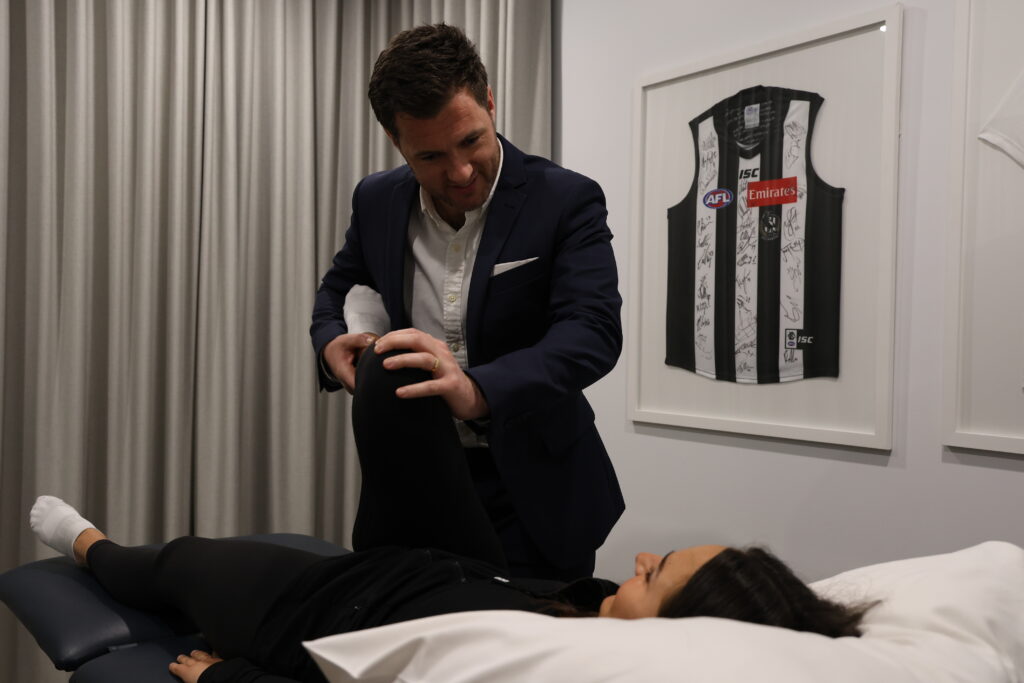
Dr. Liam West begins with a detailed history of your symptoms, training load and goals. A thorough clinical examination assesses the tendon’s tenderness, strength, flexibility and response to load. Imaging — ultrasound or MRI — is used when the diagnosis is unclear or when an injection is being considered.
If tendon pain is stopping you from training, competing or simply getting on with your day, book an appointment with Dr. Liam West, our Specialist Sports and Exercise Physician at Melbourne CBD Physiotherapy and Sports Medicine Clinic. You can also learn more about our complete Sports Medicine service.
Book Now | Learn more about Sports Medicine
Dr Liam West is a Specialist Sport and Exercise Medicine (SEM) Physician and Head Doctor of Hawthorn Football Club. He brings extensive experience across AFL, Athletics (Track and Field) and Football (Soccer), with specialist expertise in bone, muscle, tendon and joint injuries. Liam served as Sports Doctor for the Australian Athletics Team at the 2018 & 2022 Commonwealth Games, and holds a Masters of Sports and Exercise Medicine and Fellowship of the Australasian College of Sport and Exercise Physicians.
Book with Dr. Liam West | Read Liam’s Full Biography
Muscle Injuries | Joint Injuries (Shoulder & Knee) | Injections | Bone Stress Fractures / Injuries

Our team look forward to working with you to help achieve your goals
Not always. Many tendinopathies are diagnosed clinically. Imaging is most useful when the diagnosis is unclear, when recovery is slower than expected, or when a specific intervention such as an injection is being considered.
Complete rest is rarely the answer and can actually make tendinopathy worse. The goal is to reduce aggravating loads temporarily while introducing controlled, progressive exercise that helps the tendon adapt and get stronger.
Not always. Many tendinopathies are diagnosed clinically. Imaging is most useful when the diagnosis is unclear, when recovery is slower than expected, or when a specific intervention such as an injection is being considered.
Cortisone injections can play a role in carefully selected cases for short-term pain relief, but they are not first-line treatment. Repeated cortisone use around tendons carries risks, which is why injection decisions are always made on an individual basis.