Custom orthotics are prescribed by a podiatrist to help manage and distribute load more effectively across the foot. Through a podiatry-led assessment, orthotics can be designed to offload specific areas of the foot or ankle when certain tissues are irritated or overloaded. They are often used to support reconditioning and exercise programmes by allowing movement to continue while load is appropriately controlled. In some cases, custom orthotics also assist the healing process for specific foot or ankle pathologies by reducing excessive stress on affected structures.
Frequently Asked Questions
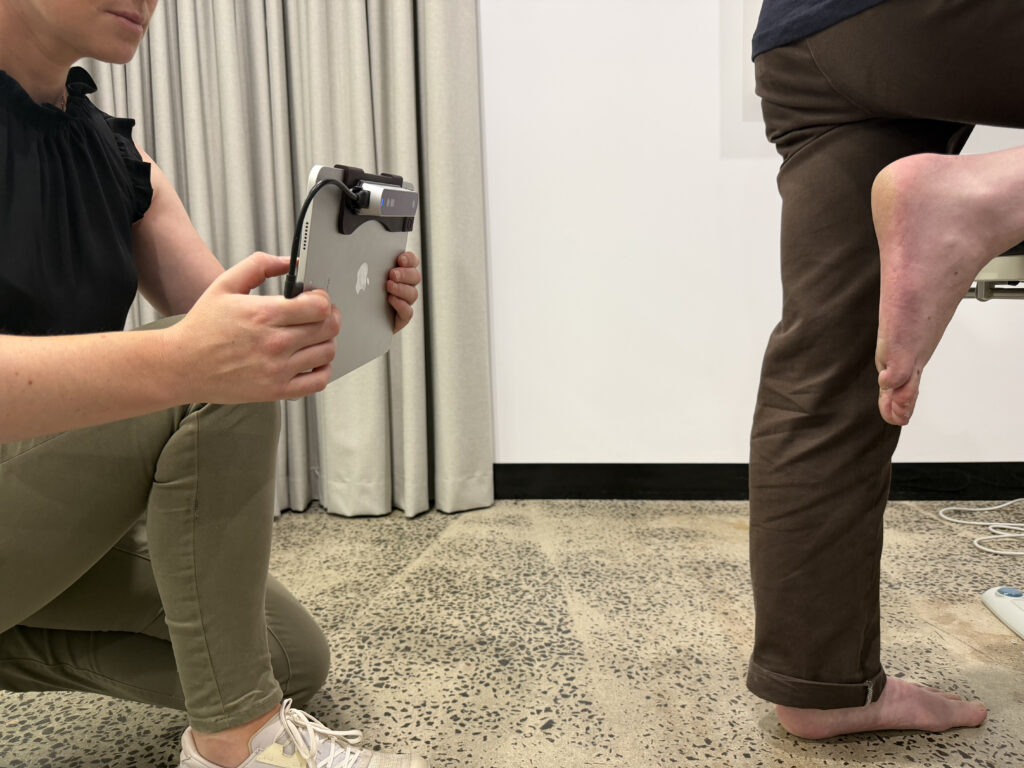
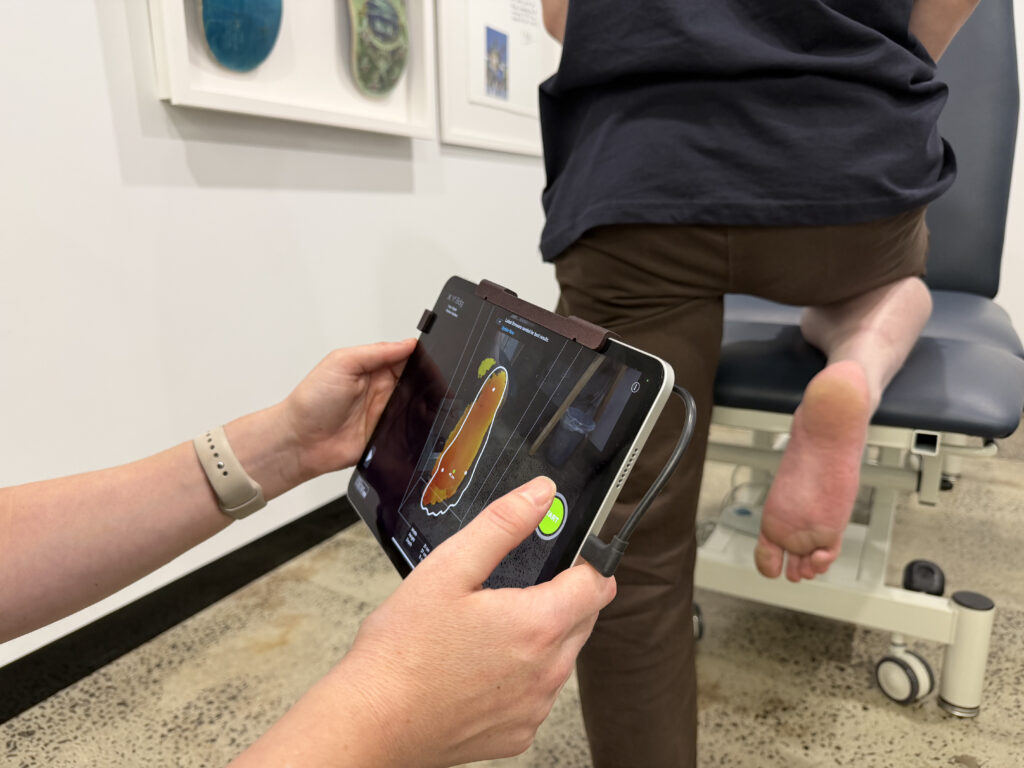
Prescribing a custom orthotic begins with a detailed clinical history and hands-on podiatryassessment to understand how the foot and ankle are functioning under load. This includes a passive joint assessment to identify any restrictions or areas requiring additional support, followed by a standing assessment to observe how load is distributed and whether this aligns with the findings from the clinical examination. Gait analysis and muscle tissue assessment are then used by the podiatrist to assess movement patterns and the capacity of key structures, particularly the plantar flexors, allowing the full clinical picture to be considered. When an orthotic is deemed appropriate, the foot is digitally scanned to create an accurate three-dimensional imprint, which is then used by our laboratory to manufacture a custom orthotic specific to your foot and functional demands.
Frequently Asked Questions
Within the rehabilitation protocol, podiatrist prescribe custom orthotics as a supportive tool rather than a standalone solution. Their role is to help manage load and pressure during daily activity and exercise, allowing rehabilitation to progress without repeatedly aggravating sensitive tissues. By improving how forces are distributed through the foot and ankle, orthotics can create a more favourable environment for reconditioning, strength development and movement retraining. As capacity improves, rehabilitation focuses on gradually increasing tissue tolerance and function, with orthotics reviewed or adjusted by your podiatrist as needed to ensure they continue to support recovery rather than replace it.
Our team look forward to working with you to help achieve your goals
The orthotic shell is designed to last many years and often up to 10 years. The top cover typically wears faster and is usually replaced every 2–3 years. Depending on foot and ankle prognosis and how reconditioning progresses, the orthotic shell may also be revised if the level of support required changes over time.
Not necessarily. Custom orthotics are usually worn during activities that place higher demand on the foot, such as work, walking, exercise or sport. Your podiatrist will guide usage based on symptoms, activity levels and the stage of rehabilitation.
The orthotic shell is designed to last many years and often up to 10 years. The top cover typically wears faster and is usually replaced every 2–3 years. Depending on foot and ankle prognosis and how reconditioning progresses, the orthotic shell may also be revised if the level of support required changes over time.
Yes. Custom orthotics often provide a starting point by placing the foot and ankle in a more optimal position. Exercises prescribed through podiatry care remain essential to improve strength, tissue capacity and function, with tailored programmes used alongside orthotics and progress tracked objectively over time.