Plantar fasciitis is one of the most common causes of heel pain and is clinically referred to as plantar heel pain or plantar tendinopathy. It typically presents as sharp or aching discomfort under the heel or along the arch, especially with the first steps in the morning or after periods of rest. The condition develops when the plantar fascia is exposed to excessive or poorly tolerated load, often influenced by factors such as foot mechanics, training volume, footwear, and prolonged standing. If left untreated, plantar fasciitis can become persistent and significantly limit daily activity and sport.
At Melbourne CBD Physiotherapy & Sports Medicine Clinic, our podiatrists provide expert plantar fasciitis treatment focused on accurate diagnosis, identification of contributing factors, and targeted management strategies. We combine hands-on care, progressive loading, footwear and orthotic guidance, and long-term prevention strategies to reduce heel pain, restore foot function, and support lasting symptom relief.
Frequently Asked Questions
Plantar fasciitis, clinically referred to as plantar heel pain or plantar tendinopathy, is identified through a detailed clinical assessment focused on symptom behaviour and response to load. Our podiatrists look for a clearly localised area of pain near the heel, often accompanied by a warm-up phenomenon where symptoms ease after a short period of activity before returning later.
We also assess how symptoms relate to changes in activity levels. In some cases, plantar fasciitis develops after reduced activity, where the load tolerance of the foot, ankle and plantar tendon has decreased. In others, symptoms arise following periods of increased or excessive activity, where demands exceed the tissue’s capacity to adapt between sessions.
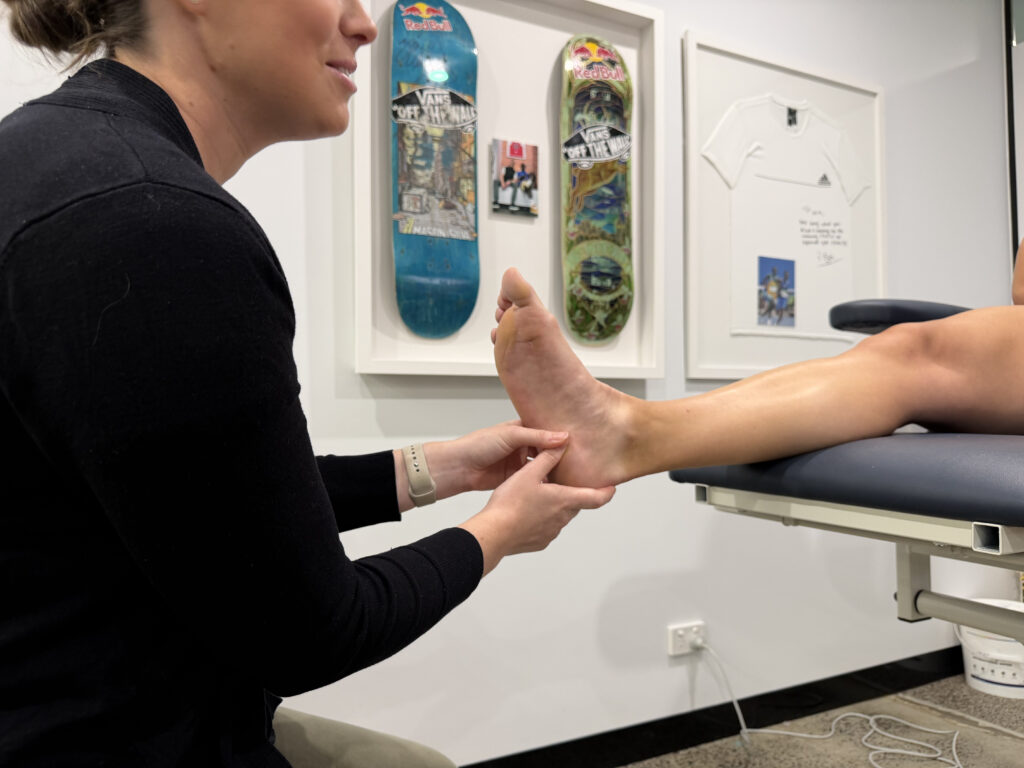
Assessment includes a passive joint examination to understand foot and ankle structure and mobility, followed by progressive loading tests. A key feature confirming plantar fasciitis is that pain remains localised to the same area of the heel as load increases, allowing us to confidently distinguish it from other causes of heel pain.
Frequently Asked Questions
Treatment focuses on restoring the foot’s ability to tolerate load, not just reducing pain. Once contributing factors are identified, our podiatrists develop a targeted plan to reduce excessive stress through the plantar fascia while progressively rebuilding tissue capacity.
Early management may involve modifying load without complete rest, supported by hands-on podiatry care, footwear guidance and, where appropriate, orthotic support to optimise foot mechanics.
As symptoms settle, treatment progresses to a structured loading programme designed to strengthen the plantar fascia and calf complex, allowing the tissue to adapt and tolerate higher demands over time.
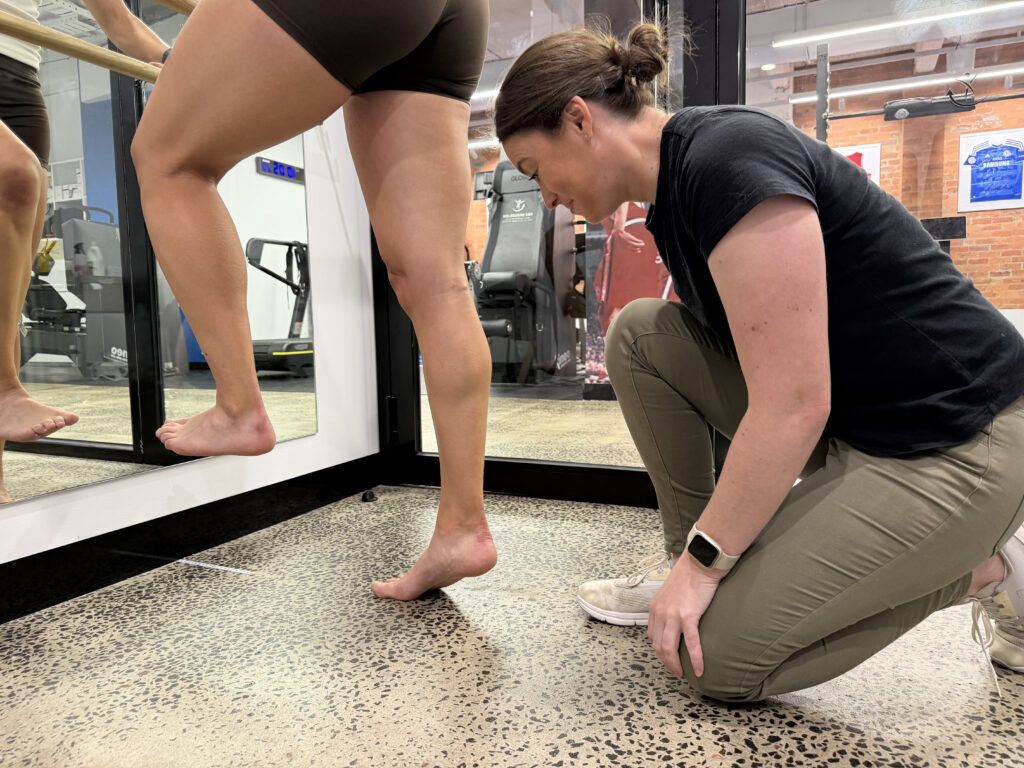
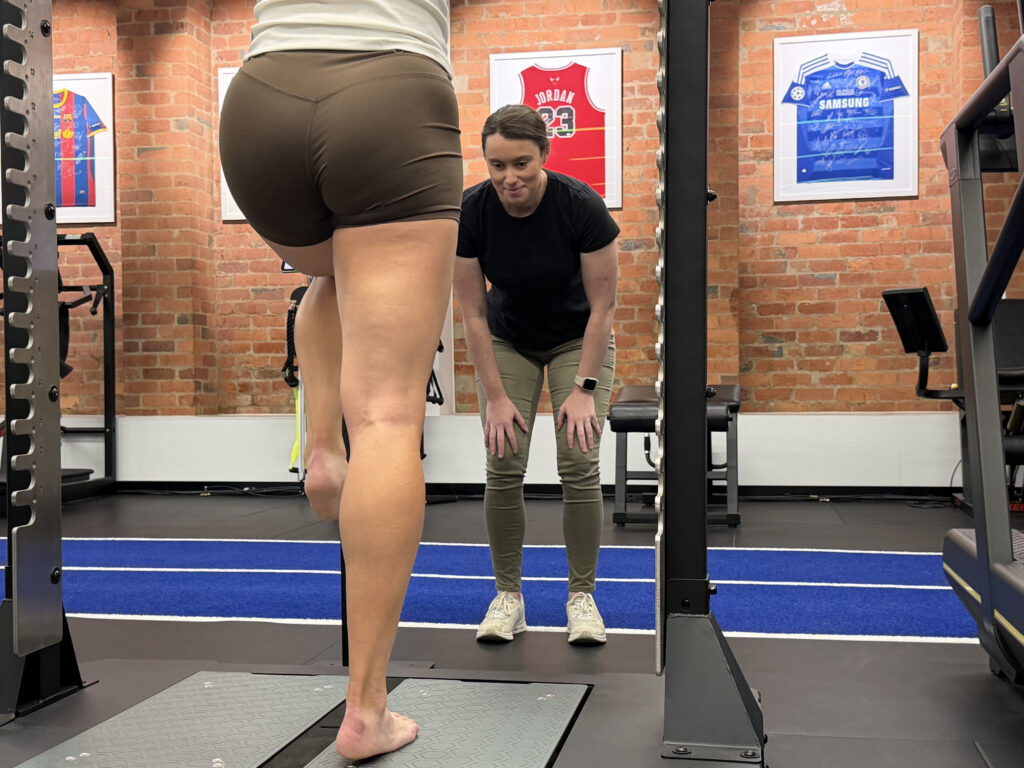
To accurately establish and monitor tissue capacity, we use advanced in-clinic technology such as force plates. This allows us to identify capacity deficits, guide progression and objectively measure improvement throughout rehabilitation.
Because tendon-related pain can take time to fully settle, progress is tracked using objective measures rather than symptoms alone, helping patients clearly see improvement and return confidently to activity.
Establishing a clear baseline level of function is critical in the management of plantar fasciitis because symptoms alone do not accurately reflect tissue capacity or recovery. Heel pain can fluctuate day to day and may improve before the plantar fascia is truly ready to tolerate higher loads. By identifying a patient’s baseline function, our podiatrists can determine how much load the tissue can safely handle at the start of treatment, set appropriate progression targets, and avoid premature increases in activity that can trigger flare-ups. This approach also allows progress to be measured objectively over time, helping patients see meaningful improvements in strength and capacity even when symptoms change slowly, and supporting a safer, more confident return to daily activities, exercise, and sport.
Our team look forward to working with you to help achieve your goals
The timeframe for improvement varies between individuals and depends on how long symptoms have been present, contributing factors, and how well load is managed during treatment. Some people notice early improvements within weeks, while others may take several months to fully settle. Because plantar fasciitis is a tendon-related condition, recovery is usually gradual. Focusing on restoring tissue capacity rather than chasing short-term pain relief leads to more consistent, long-lasting outcomes.
Complete rest is rarely helpful for plantar fasciitis and can sometimes slow recovery. In most cases, symptoms improve with appropriate load modification, not total avoidance of activity. This means reducing or temporarily changing activities that overload the plantar fascia, while maintaining safe levels of movement and progressing load in a structured way. Your podiatrist will guide which activities to modify and how to return to higher-demand tasks safely.
The timeframe for improvement varies between individuals and depends on how long symptoms have been present, contributing factors, and how well load is managed during treatment. Some people notice early improvements within weeks, while others may take several months to fully settle. Because plantar fasciitis is a tendon-related condition, recovery is usually gradual. Focusing on restoring tissue capacity rather than chasing short-term pain relief leads to more consistent, long-lasting outcomes.
Orthotics can be helpful for some people with plantar fasciitis, particularly when foot mechanics are contributing to excessive load through the heel. They are not a stand-alone solution, but when used appropriately, orthotics can help redistribute load and reduce strain on the plantar fascia while tissue capacity is being rebuilt. Whether orthotics are recommended depends on individual assessment findings and how they fit into the broader management plan.