Big toe arthritis is commonly assessed by a podiatrist through a detailed evaluation of joint mobility, load tolerance and foot function. Assessment focuses on how the big toe contributes to walking and running mechanics, particularly during push-off, and how joint stiffness or pain may be altering movement patterns. Based on these findings, a podiatrist can develop an individualised management plan aimed at reducing joint stress, improving function and supporting long-term foot health.
Frequently Asked Questions
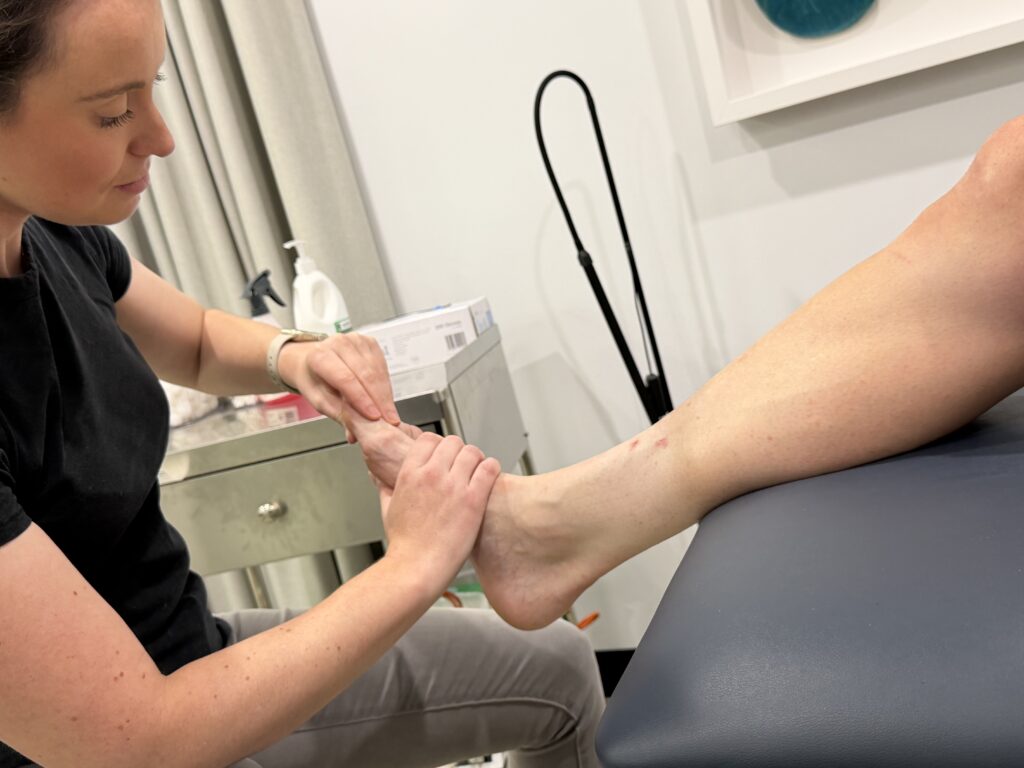
At Melbourne CBD Physiotherapy & Sports Medicine Clinic, the diagnosis of big toe arthritis begins with a detailed podiatry assessment focused on joint movement, symptom behaviour and functional loading. Our podiatrists assess great toe range of motion, which is often reduced and clinically described as hallux limitus or hallux rigidus depending on severity.
Assessment also includes joint line palpation, pain response into extension, and evaluation of the midfoot and rearfoot to understand how the great toe can be offloaded and preserved during walking and running.


Frequently Asked Questions
Podiatry management of big toe arthritis focuses on reducing stress through the great toe joint while preserving function. Treatment is guided by assessment of the forefoot, midfoot and rearfoot to identify strategies that help offload the joint during walking and running. This may include footwear guidance, orthotic intervention where clinically indicated, and activity modification aimed at limiting painful extension during push-off while supporting more efficient movement.
Living with big toe arthritis often requires an understanding of how daily activity, footwear and training loads influence symptoms. Pain may fluctuate depending on walking volume, time spent on the forefoot and activities that require repeated push-off. With appropriate guidance, many people are able to remain active by managing joint stress, modifying aggravating movements and supporting more efficient foot function over time.
Our team look forward to working with you to help achieve your goals
Big toe arthritis is diagnosed through a clinical podiatry assessment that examines great toe range of motion, pain response and walking mechanics. Reduced extension, pain with joint line palpation and symptoms reproduced when the toe moves into extension are common findings. Imaging such as X-ray may be used to confirm joint changes, particularly when symptoms are persistent or progressively worsening.
Big toe arthritis may develop due to previous trauma to the great toe, repetitive loading over time, joint structure or altered foot mechanics. Factors such as limited joint mobility, footwear that increases toe extension and long-term stress through the forefoot can also contribute to symptom progression.
Big toe arthritis is diagnosed through a clinical podiatry assessment that examines great toe range of motion, pain response and walking mechanics. Reduced extension, pain with joint line palpation and symptoms reproduced when the toe moves into extension are common findings. Imaging such as X-ray may be used to confirm joint changes, particularly when symptoms are persistent or progressively worsening.
Yes. Many cases of big toe arthritis can be managed without surgery. Podiatry treatment focuses on reducing stress through the great toe joint using strategies such as footwear modification, orthotic support where appropriate and activity guidance. In some cases, referral to a specialist sports and exercise physician for injection therapy may be considered as part of a broader management plan when symptoms remain limiting despite appropriate conservative care.